Photograph Album -
History of
The Buhl Planetarium and
Institute of
Popular Science
Pittsburgh, Pennsylvania
America's Fifth Major Planetarium
October 24, 1939 through August 31, 1991
[Operated by Carnegie Institute
from January, 1987 through
February, 1994]
Master Index of Photographs on the Web Site of
History of The Buhl Planetarium and Institute of Popular Science, Pittsburgh
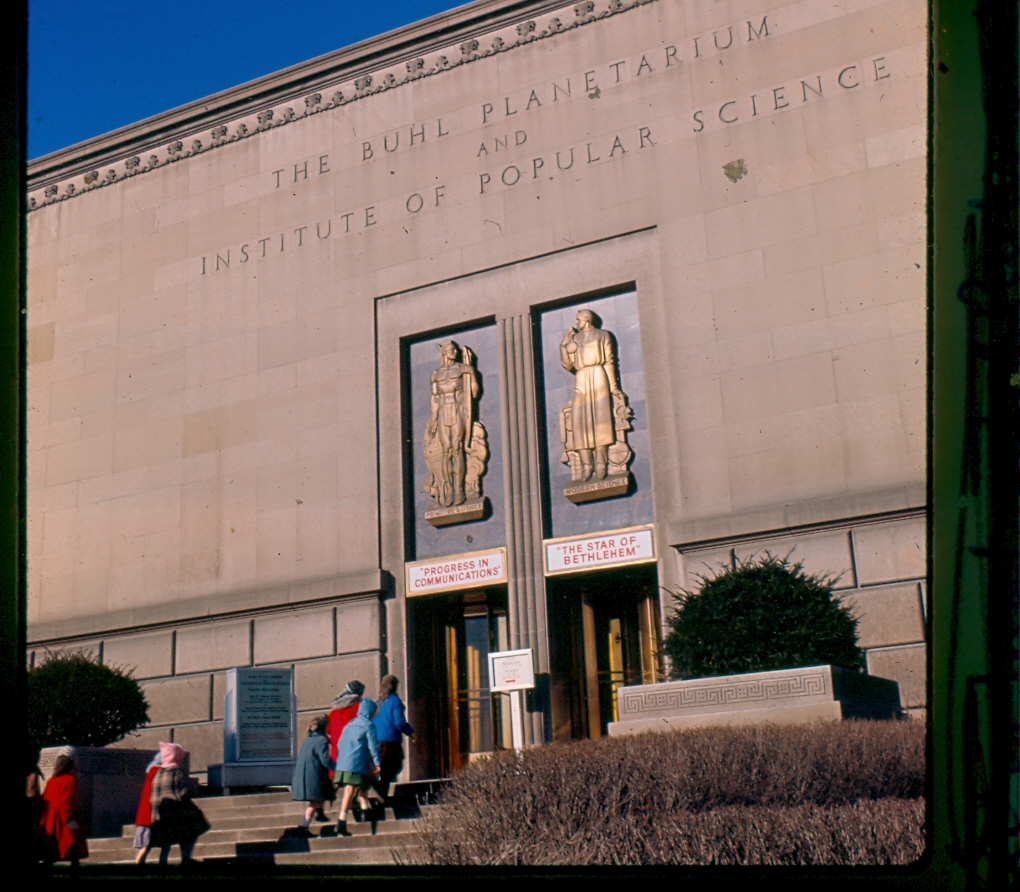
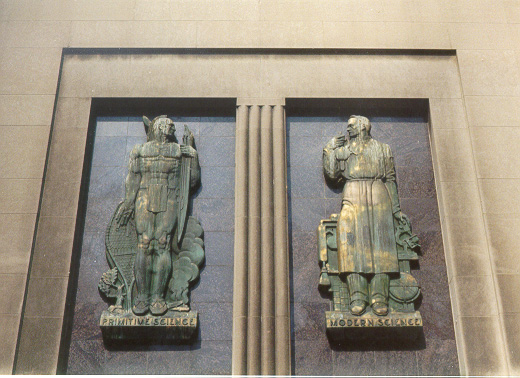
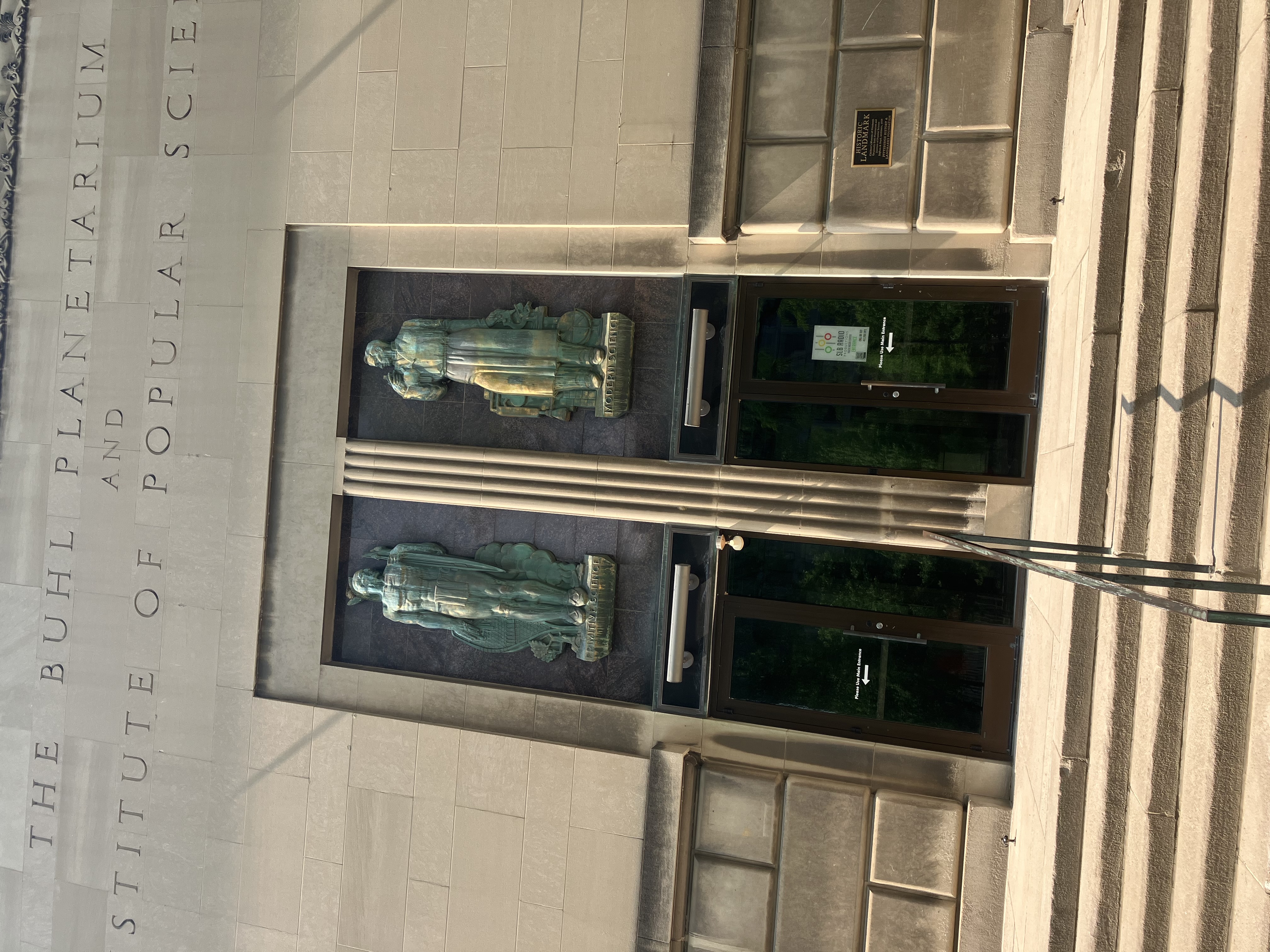
Photograph 4 shows the
brass
sculptures, "Primitive Science" and "Modern Science," over the main
building entrance. ---
1998 October Image (1) ***
2023 May Image (5)
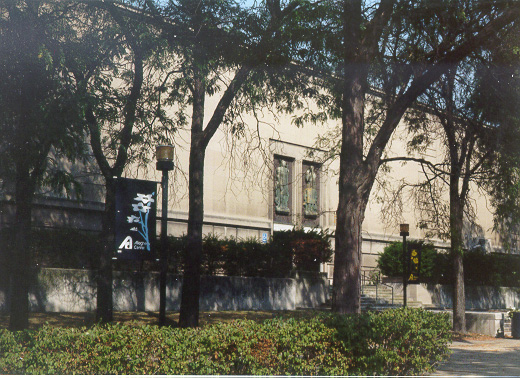
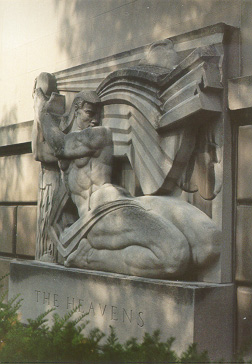
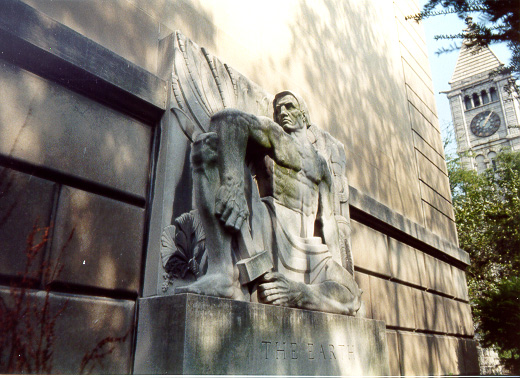
Photographs 5 and 6 show the
sculptures,
"The Heavens"
and
"The Earth" respectively, in the Indiana limestone on the front
building facade; "The Heavens"
is west of the front entrance, above a handicapped access ramp; "The
Earth" is east of the front entrance [with the clock tower of the historic
Allegheny Regional Branch of The Carnegie Library of Pittsburgh (originally, Carnegie Free Library of Allegheny) in the background].
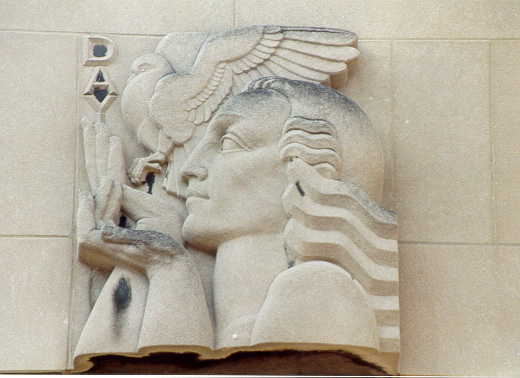
Photograph 7 shows the
sculpture,
"Day," over the outside entrance(facing east and facing the main entrance
to the Allegheny
Regional Branch of The Carnegie Library of Pittsburgh) to
the East Gallery (formerly known
as "The Hall of the Universe").
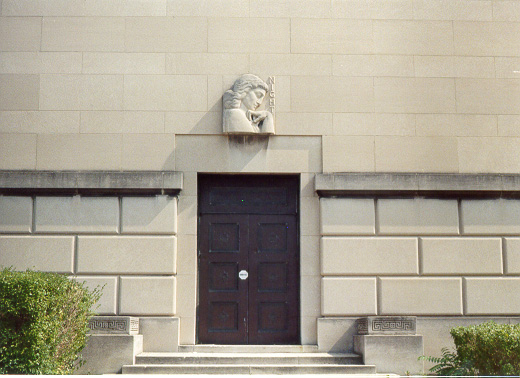
Photographs
8 and
9 show the
sculpture,
"Night," over the outside entrance(facing west and facing the former
Allegheny City Post Office, which is now The
Pittsburgh Children's Museum)
to the 250-seat Lecture Hall (also known as "The Little Science Theater").
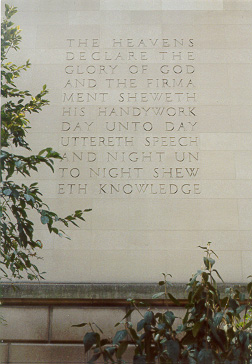
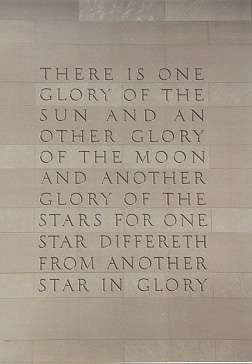
Photographs 10 and
11 show astronomical inscriptions, from the Christian Bible, on the
east and
west
building exterior walls, respectively (also, see
news article regarding removal of inscription on east exterior wall).
Also, see
photographs of Buhl Planetarium eastern exterior wall after removal of inscription (from the 19th Psalm) & photographs of small, partial remnant of inscription mounted on Buhl Planetarium's front yard.
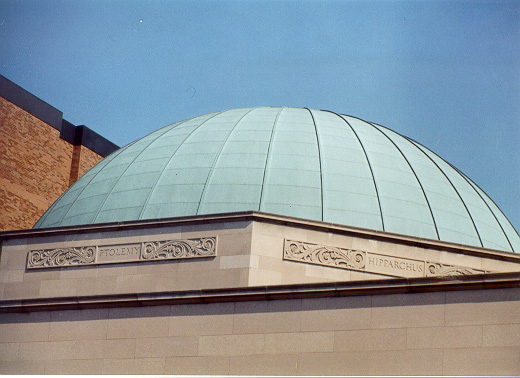
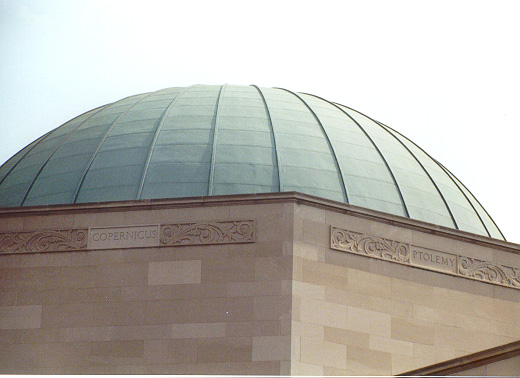
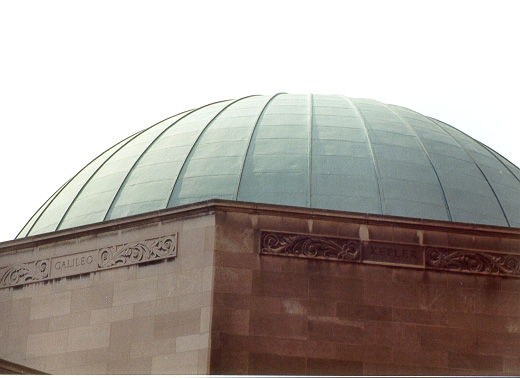
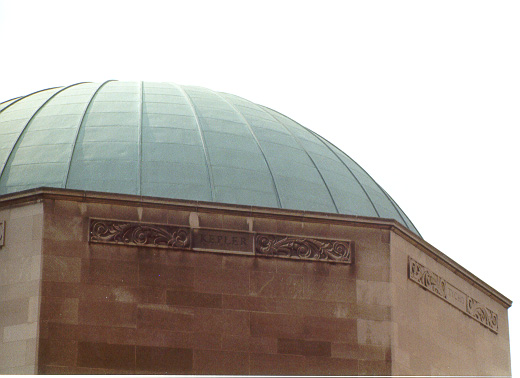
Photographs 12 through 16 show
various views of the
exterior planetarium dome (which encloses a separate
interior planetarium dome). These photographs were taken by free-lance photographer Lynne S. Walsh in October of 1998. The
names of historic astronomers and
scientists are inscribed just below the dome. Also see
construction of the Buhl Planetarium exterior dome.
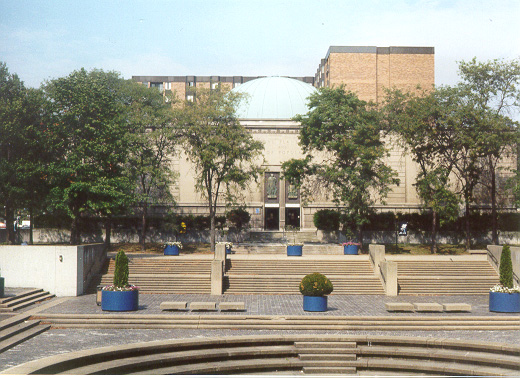
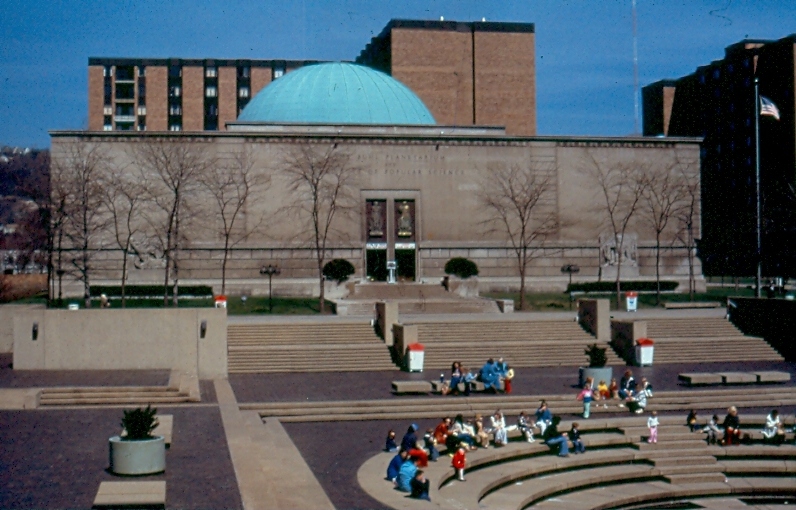
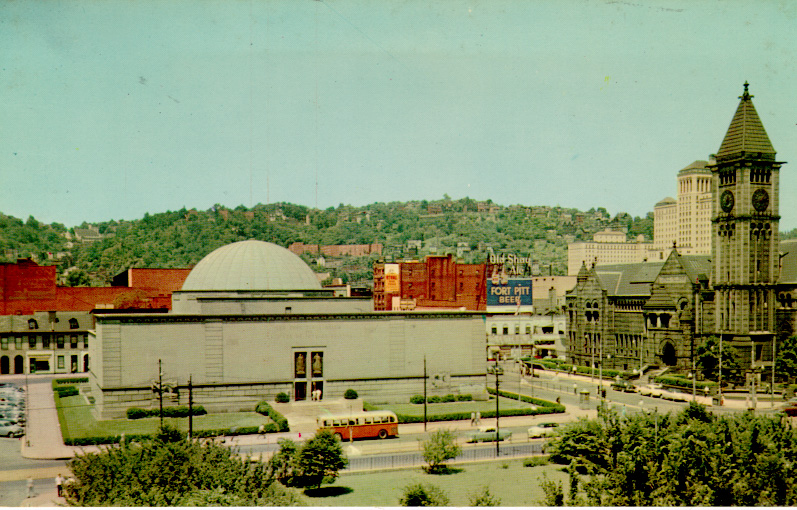
Photograph 17 shows The Buhl Planetarium and Institute of Popular Science
and the Allegheny
Regional Branch of The Carnegie Library of
Pittsburgh in
the 1950s, prior to creation of the Allegheny Center complex.
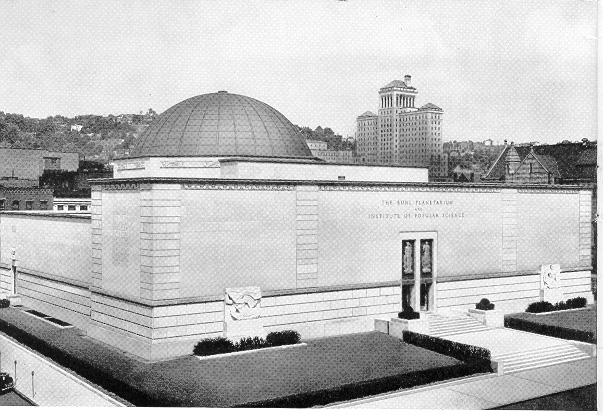
Photograph
18 shows the Buhl Planetarium building in 1939, when the building first opened to the public (photograph published in a 1956 promotional book titled, Buhl Planetarium).
Streetcars and Buhl Planetarium: Photographs
22 (1966),
25 (1938),
26 (prior to 1964),
27 (1966),
28 (mid-1960s)
Dedicated on 1939 October 24, Pittsburgh's original
Buhl Planetarium and Institute of Popular Science opened at a time when most city residents used public transportation (in Pittsburgh, mostly streetcars and inclines) to travel for work, school, medical visits, and shopping, as well as for entertainment and recreation trips. Buhl Planetarium, located in the center of the North Side (formerly Allegheny City) business district (Buhl Planetarium was built on the site of the former
City Hall of Allegheny City), the institution was well-placed for people arriving by public transportation. Buhl Planetarium did also provide head-in parking spaces, outside of the west wall of the building, for motorists visiting the institution. Today, the original Buhl Planetarium building (currently used by the
Children's Museum of Pittsbugh) is easily accessible by the several
Port Authority of Allegheny County (PAT) bus routes which travel around Allegheny Center and Allegheny Commons Park. Bus route 54 (previously 54C) North Side - Oakland - South Side inner city neighborhood bus line stops close to the Buhl Planetarium building (now using the former taxi cab stand, as a bus stop, at the bottom of the steps to Allegheny Center Mall, on Children's Way). And, the Buhl Planetarium building is now only three blocks from the
North Side Subway Station, which opened in March of 2012.
Streetcars and Buhl Planetarium
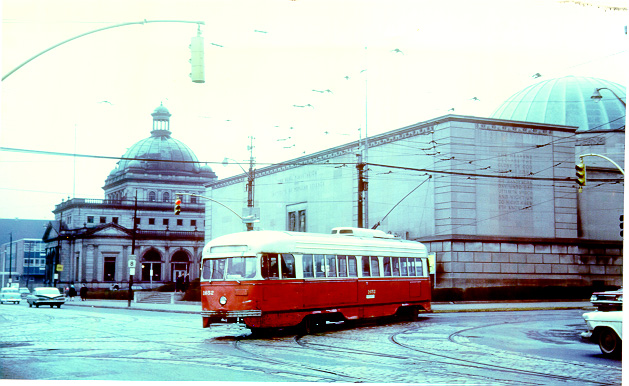
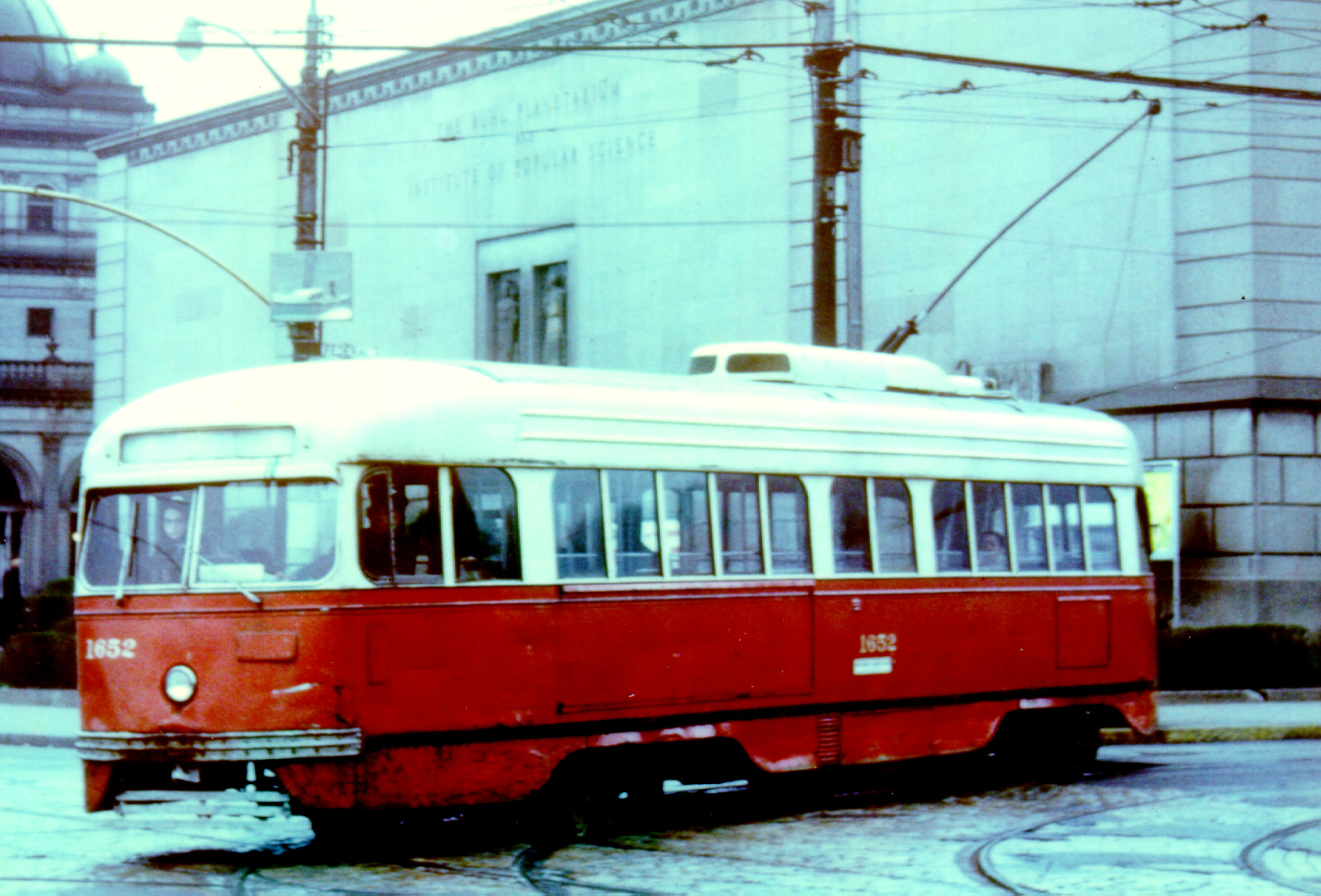
Photograph 22 is shown with two images of southbound
Port Authority of Allegheny County (PAT) PCC
(Presidents' Conference Committee) streetcar number 1652 turning from Federal Street, east, onto East Ohio Street, in April of 1966, in front of the
Allegheny Regional Branch of The Carnegie Library of Pittsburgh. Although the trolley route number and name are not visible in this photograph, this streetcar may have been running the famed The Fly'n Fraction streetcar line (nicknamed The Fly'n Fraction by KDKA-AM morning rush-hour radio personality
Rege Cordic), officially known as the 77 / 54 North Side - Oakland - South Side line (now the route 54 bus line).
The Library cannot be seen in this photograph, however, Pittsburgh's original
Buhl Planetarium and Institute of Popular Science is in the background of both images; one image also shows the
Old Allegheny Post Office farther in background.
Photograph 25, taken from the roof of the
Boggs and Buhl Department Store on 1938 October 22, shows a streetcar on West Ohio Street, in front of Pittsburgh's original
Buhl Planetarium and Institute of Popular Science, while the
planetarium dome was still under construction.
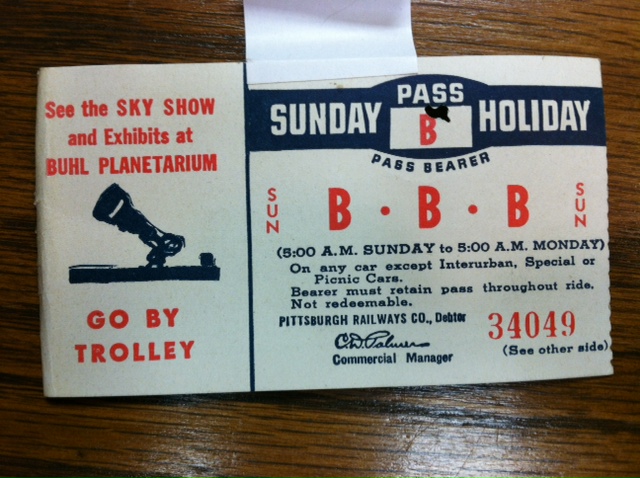
Photograph number 26 shows a Sunday/Holiday trolley pass, offered by the
Pittsburgh Railways Company (prior to transfer of the Pittsburgh transit system to
PAT in March of 1964), which includes an advertisement for
Buhl Planetarium. It is not known whether this was a paid advertisement or a
Pittsburgh Railways Company promotion to give people a reason to buy the pass. (Photograph 26: Courtesy: Manfred Fisher)
Photograph 22: Image 1 ***
Image 2 (Enlargement of Image 1) *** More info on photo.
Photograph 25 ***
Photograph 26 (Photograph 26: Courtesy: Manfred Fisher)
Photograph 27 is part of the University of Pittsburgh's "Oakland: A Look Back Over the 20th Century" Internet exhibit. Photograph 14 of the exhibit shows two streetcars passing on Fifth Avenue in Oakland. The eastbound streetcar (No. 1560) displays a large advertisement on the north side of the streetcar, promoting the Theater of the Stars at The Buhl Planetarium and Institute of Popular Science. To see this photograph, go to the following web page and click-on photograph number 14: < http://digital.library.pitt.edu/pittsburgh/exhibits/oakland-a-look-back/ >.
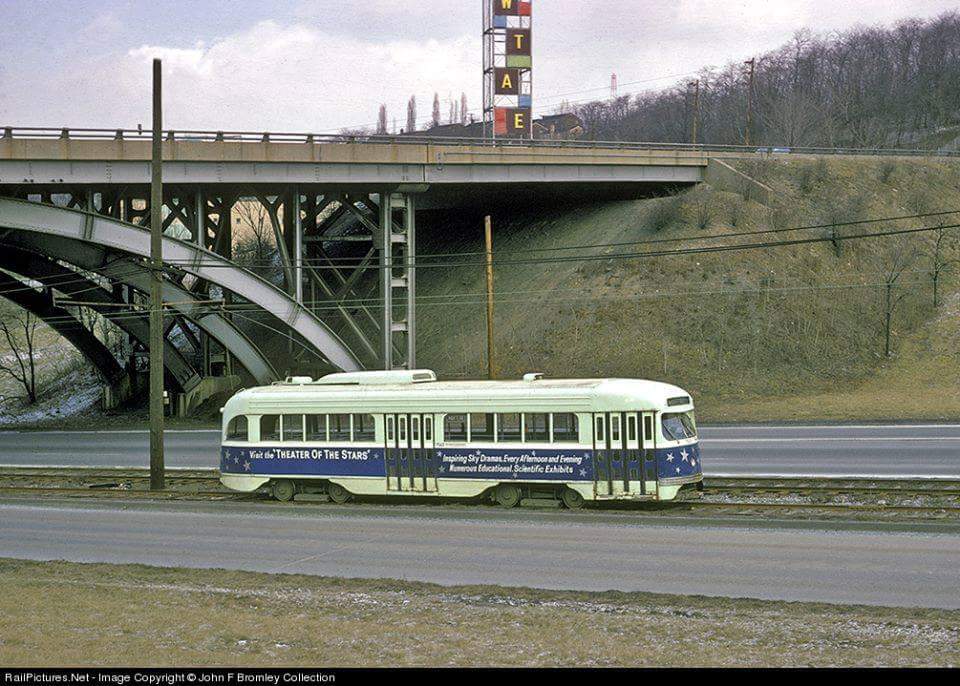
Photograph 28 shows a Port Authority of Allegheny County (PAT) streetcar, with a large advertisement promoting Buhl Planetarium's Theater of the Stars on the south side of the streetcar, in the mid-1960s heading eastbound on exclusive rail right-of-way between the eastbound and westbound lanes of Ardmore Boulevard (U.S. 30) near the Wilkinsburg borough - Forest Hills borough municipal boundary [this streetcar had just passed under a Penn-Lincoln Parkway-East (Interstate 376) bridge, after passing the studios of WTAE-TV 4].
(Note: Photographs 1 through 16, and the photograph of the Civil Defense Sign (Photo 23),
were taken by Pittsburgh area free-lance photographer Lynne S. Walsh in October of 1998 -
© Copyright 1999 to 2014 Lynne S. Walsh, All Rights Reserved.)
Photographs of Civil Defense Sign on Buhl Planetarium
Civil Defense Sign (Photo 23) (1)
*** Photo 3 (1)
In the early 1960s, the Office of Civil Defense, in the United States Department of Defense, designated the basements and lower levels of thousands of buildings throughout the country, particularly public buildings, as radiation fallout shelters. These were shelters where citizens could evacuate to, in case of nuclear attack on the United States. Each shelter contained food rations (crackers), drinking water (in large metal drums), a Geiger Counter to measure radiation, and emergency medical supplies.
In theory, citizens could live in these shelters for a few weeks, to avoid most of the radiation fallout from the detonation of a nuclear bomb in the vicinity. Particularly during the Cuban Missile Crisis in October of 1962, school children were trained to "duck and cover" and to assemble in the school's fallout shelter, as children participate in school fire drills today.
This system for protecting the public from fallout radiation was never tested on a large scale and, fortunately, was never needed for an actual emergency. About ten to fifteen years after these radiation fallout shelters were conceived, it was determined that the cracker rations and water were no longer fit for human consumption. These supplies were never replaced; they were simply discarded. Other supplies were also, eventually, discarded. The metal drums (which included the Civil Defense logo), which held water, were often reused for other storage by the host building. In one instance, the Geiger Counter provided for the fallout shelter in the basement of the Shaler High School, in the northern Pittsburgh suburb of Glenshaw, was given to the high school science department.
The basement of Buhl Planetarium was designated as a radiation fallout shelter. As with all such designations, the Office of Civil Defense provided a yellow and black sign, with the Civil Defense logo, which was placed at the entrance to a building or other prominent location. After about twenty years since the dissolution of the Office of Civil Defense, these historic relics of the "Cold War" are rapidly disappearing; only about a dozen or two such signs still exist in the Pittsburgh area (mostly on government and other public buildings). The sign on Buhl Planetarium was mounted just above and east of the main entrance to the building. At the bottom of the sign, it reads "BASEMENT."
With the dissolution of the Office of Civil Defense, Buhl Planetarium's Civil Defense sign became the property of the legal owner of the Buhl Planetarium building: the City of Pittsburgh.
This sign continued to be mounted at this location until December of 2002. The sign was removed during rehabilitation of the building, for use as part of the Children's Museum of Pittsburgh. Children's Museum Deputy Director Chris Siefert informed the author, Glenn A. Walsh, that the Children's Museum has placed the Civil Defense sign in storage. Here are two photographs of the sign, as it appeared in October of 1998:
Civil Defense Sign (Photo 23) (1)
*** Photo 3 (1)
Photo 24: Buhl Planetarium visitor John Daniel Potemra (then of the McKeesport suburb of Versailles Borough) stands outside at the visitors' entrance to The Buhl Planetarium and Institute of Popular Science (then known as the Buhl Science Center), on 1983 September 24
(5).
He stands beside a large sign, mounted between the two visitor doors (at that time, recently converted from the original two revolving doors to two large glass doors, to provide accessibility to the disabled), which advertises some of the major attractions in the building including the "Pixel-Paint Pots" artistic touch computer, Computers [in the
Computer Learning Lab (CLL)], "BioCorner" Chick-Hatching Exhibit,
Planetarium Sky Shows, Laserium Laser-Light Concerts, and Demonstrations and Lectures.
Photograph of east side of Buhl Planetarium;
Opposite Public Entrance to
Allegheny Regional Branch, Carnegie Library of Pittsburgh
[Photograph is part of County of Allegheny Real Estate Web Site]
1956 Photographs of
The Buhl Planetarium and Institute of Popular Science
Photographs of some Buhl Planetarium and
Institute of Popular Science
exhibits
now displayed at The Carnegie Science Center
Other Facilities and Artifacts Out-Of-Doors of Buhl Planetarium (2023 May)
Sidney Waugh Reliefs in Dispute -
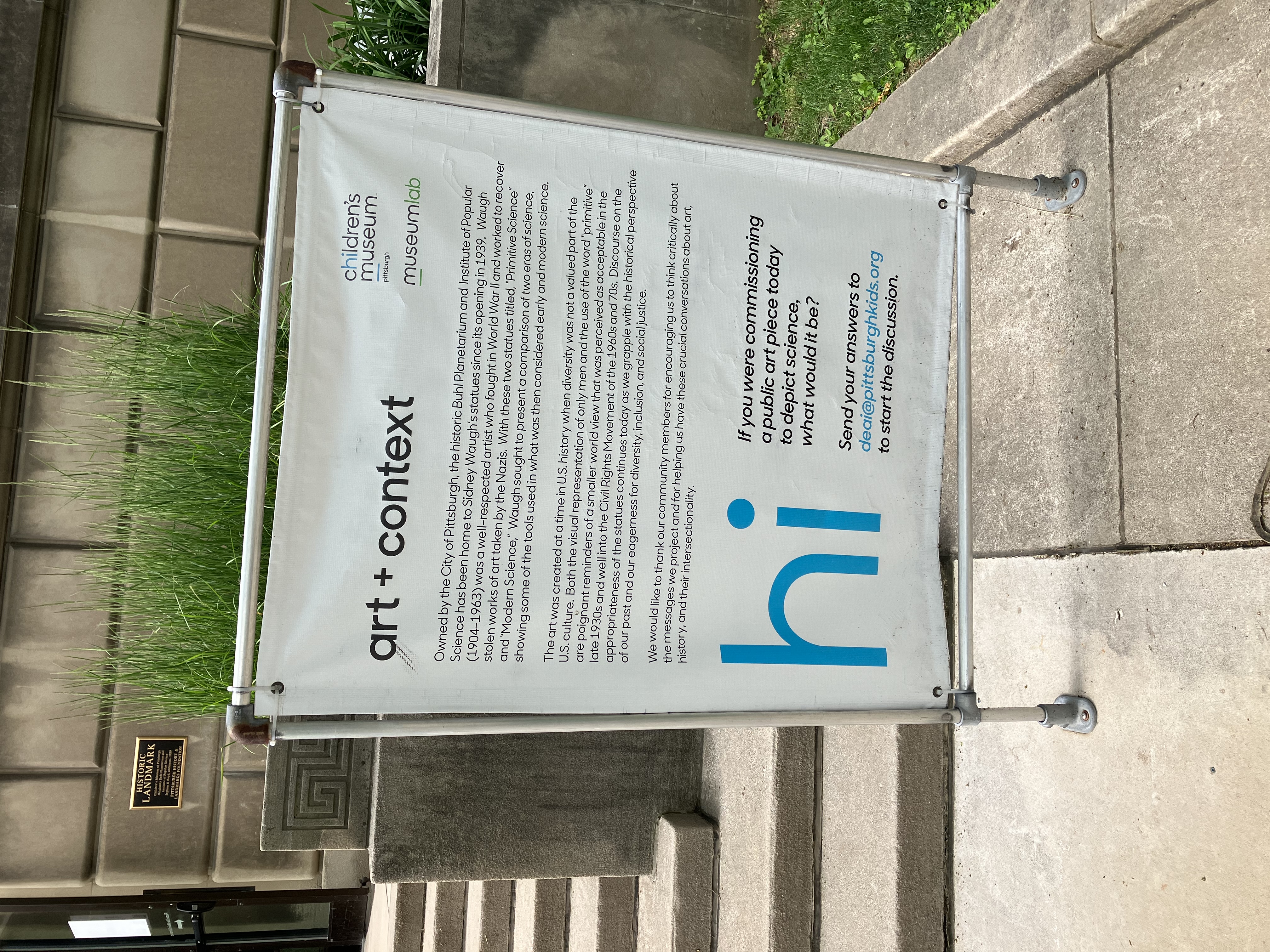
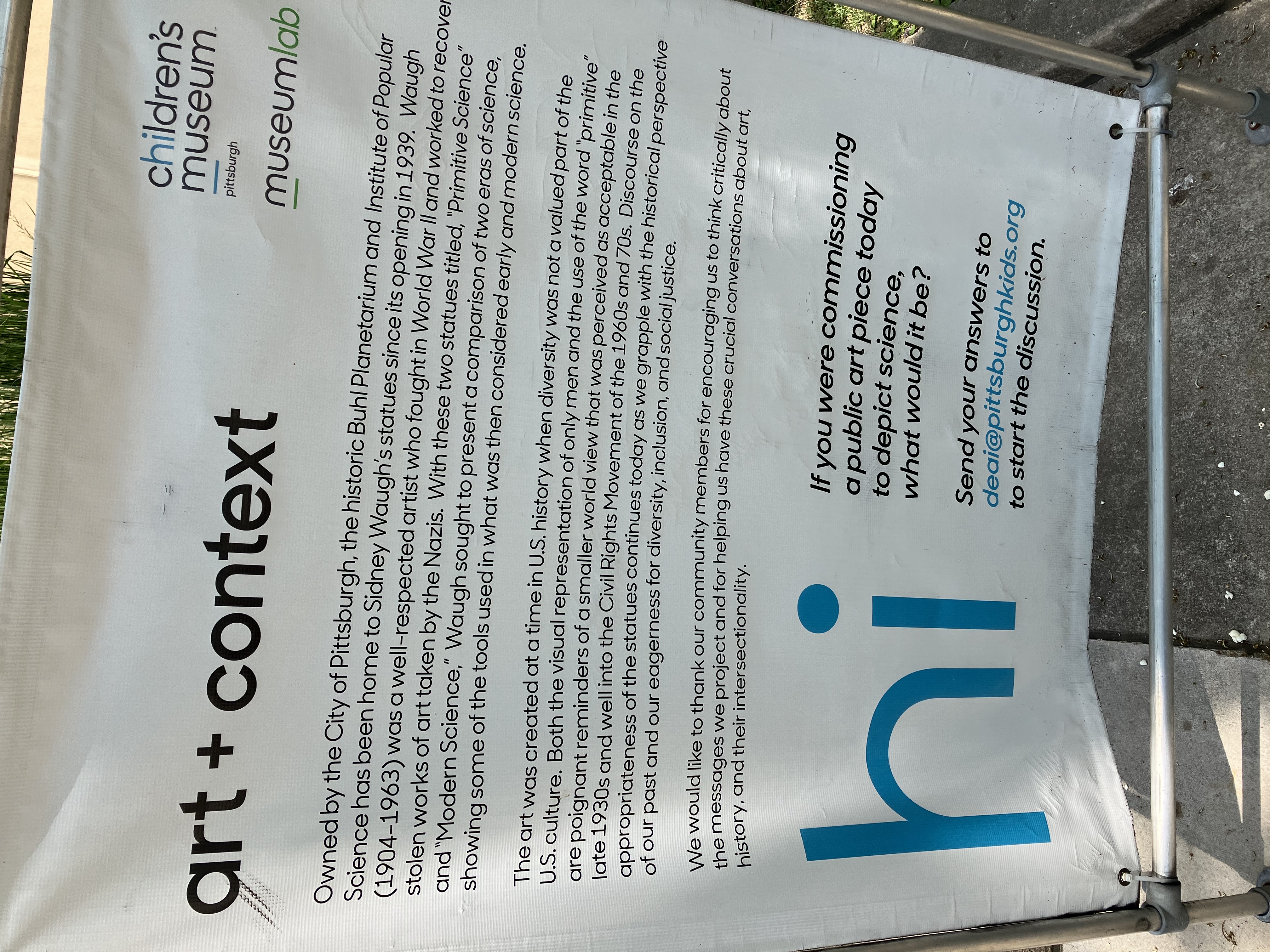
Above the front doors of Buhl Planetarium are two brass reliefs, produced by noted 20th century sculptor Sidney Waugh, titled "Primitive Science" (showing a Native American) and "Modern Science" (showing a 1930s-era scientist in a lab coat). Apparently, some members of the community have complained about the Native American being associated with the term "Primitive Science". The Children's Museum of Pittsburgh, in 2022, placed a large sign close to the reliefs indicating that the building and reliefs are the property of the City of Pittsburgh (the building is a City-Designated Historic Structure, with the exterior reviewed by the Historic Review Commission), Sidney Waugh was a noted sculptor who helped rescue art stolen by the Nazis in World War II, and that 1930s-era sensibilities are different than those of today. The following are photographs regarding this issue ---
Sidney Waugh Reliefs in Dispute ***
Children's Museum of Pittsburgh Sign:
Link 1
(5) ***
Link 2
(5)
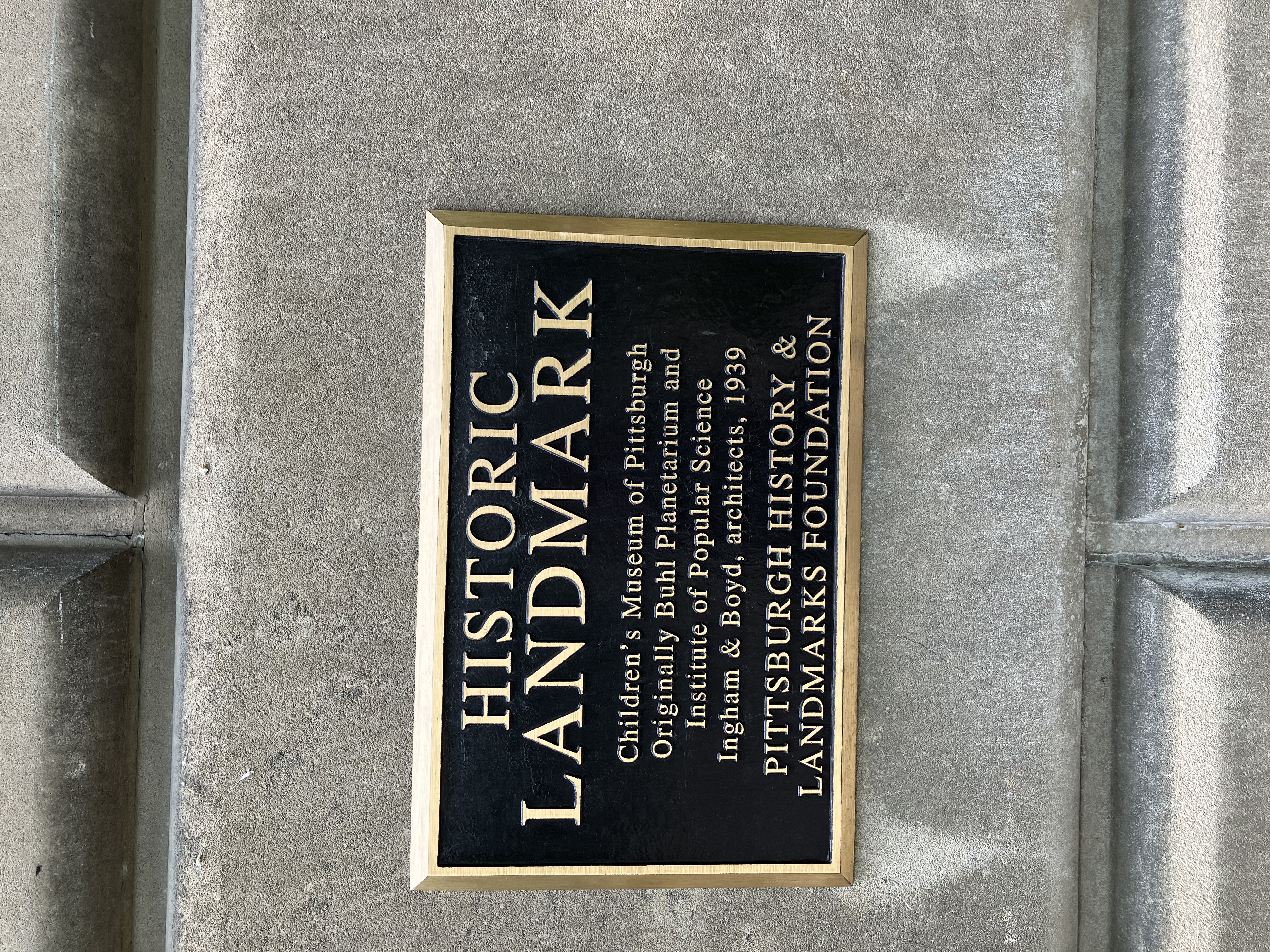
Buhl Planetarium Historic Plaque (5)
(Pittsburgh History and Landmarks Foundation)
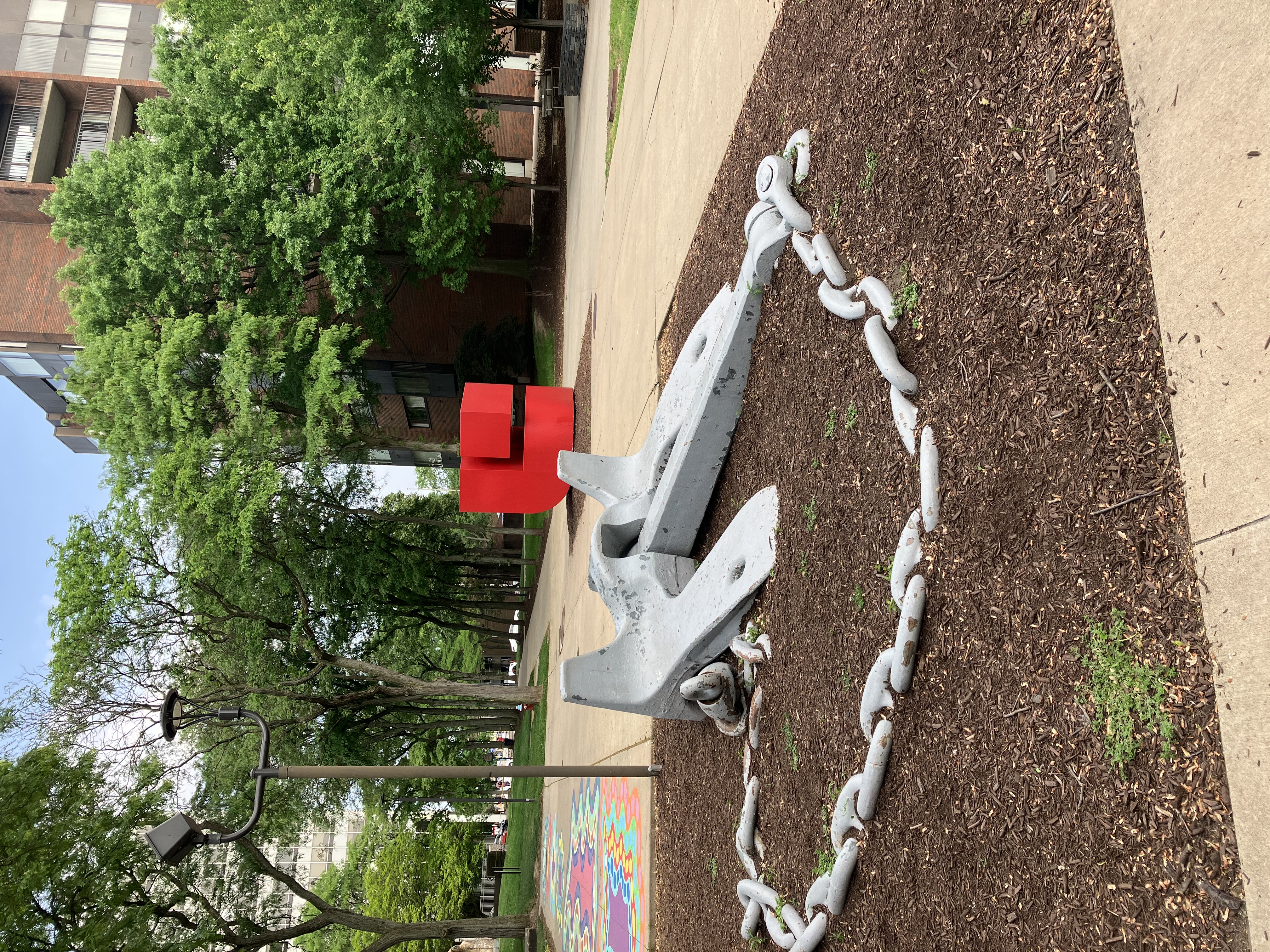
Ship Anchor (5)
(Pittsburgh History and Landmarks Foundation) Outside of Buhl Planetarium in Allegheny Square Plaza
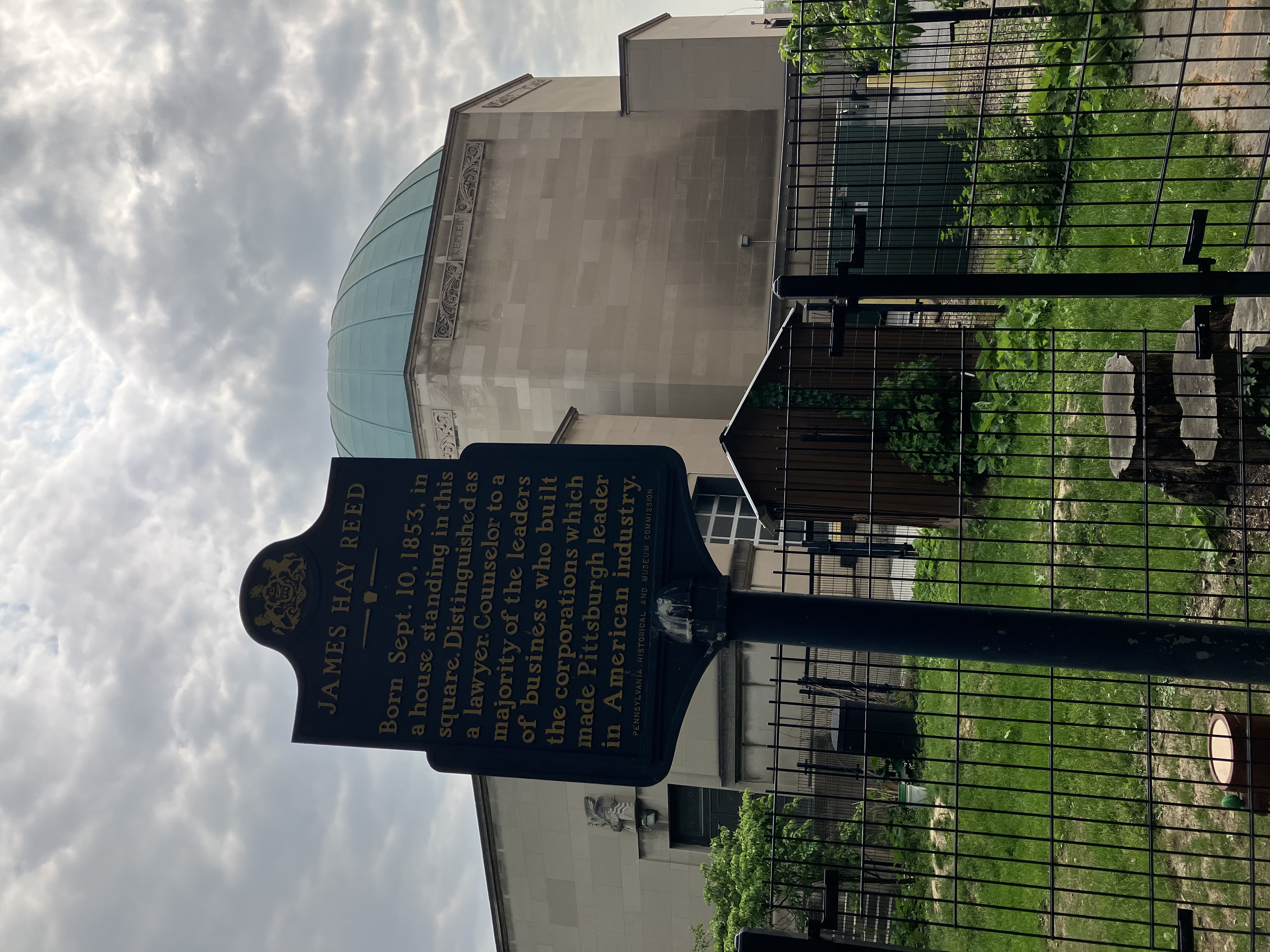
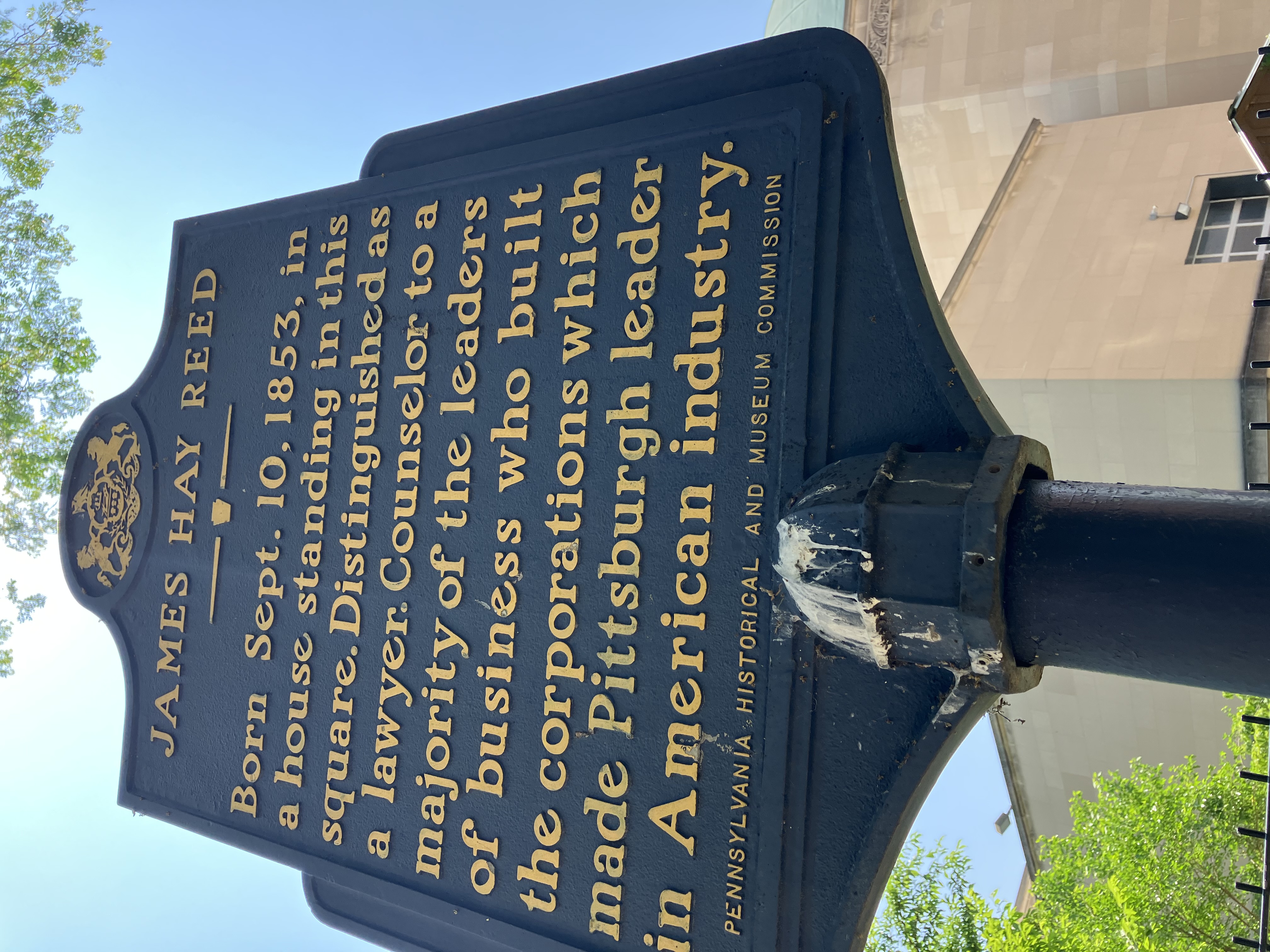
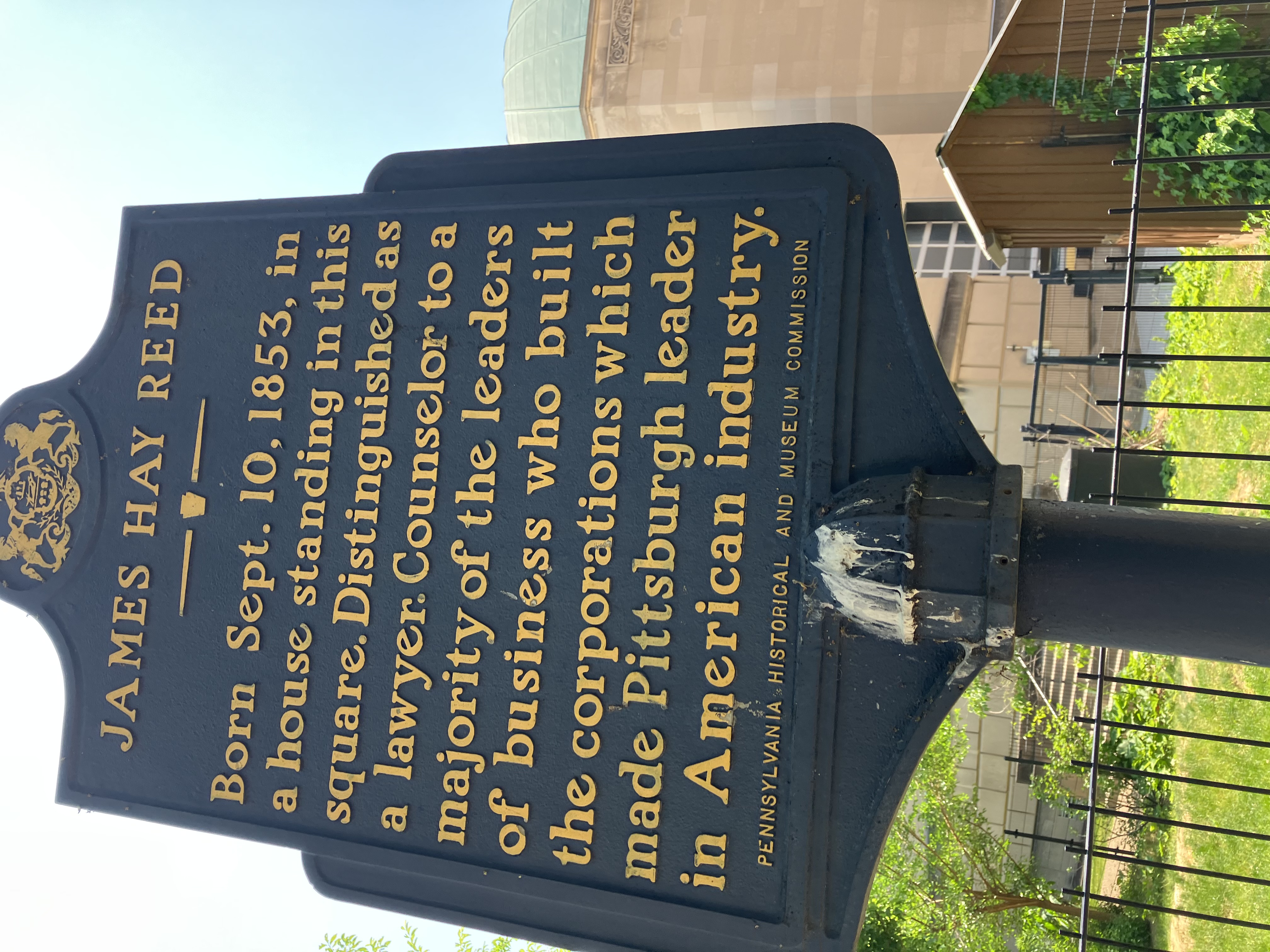
Historic Plaque Regarding 19th Century Pittsburgh Attorney & Business Leader James Hay Reed (Pennsylvania Historical and Museum Commission) in Buhl Planetarium's northeast yard:
Link 1
(5) ***
Link 2
(5) ***
Link 3
(5)
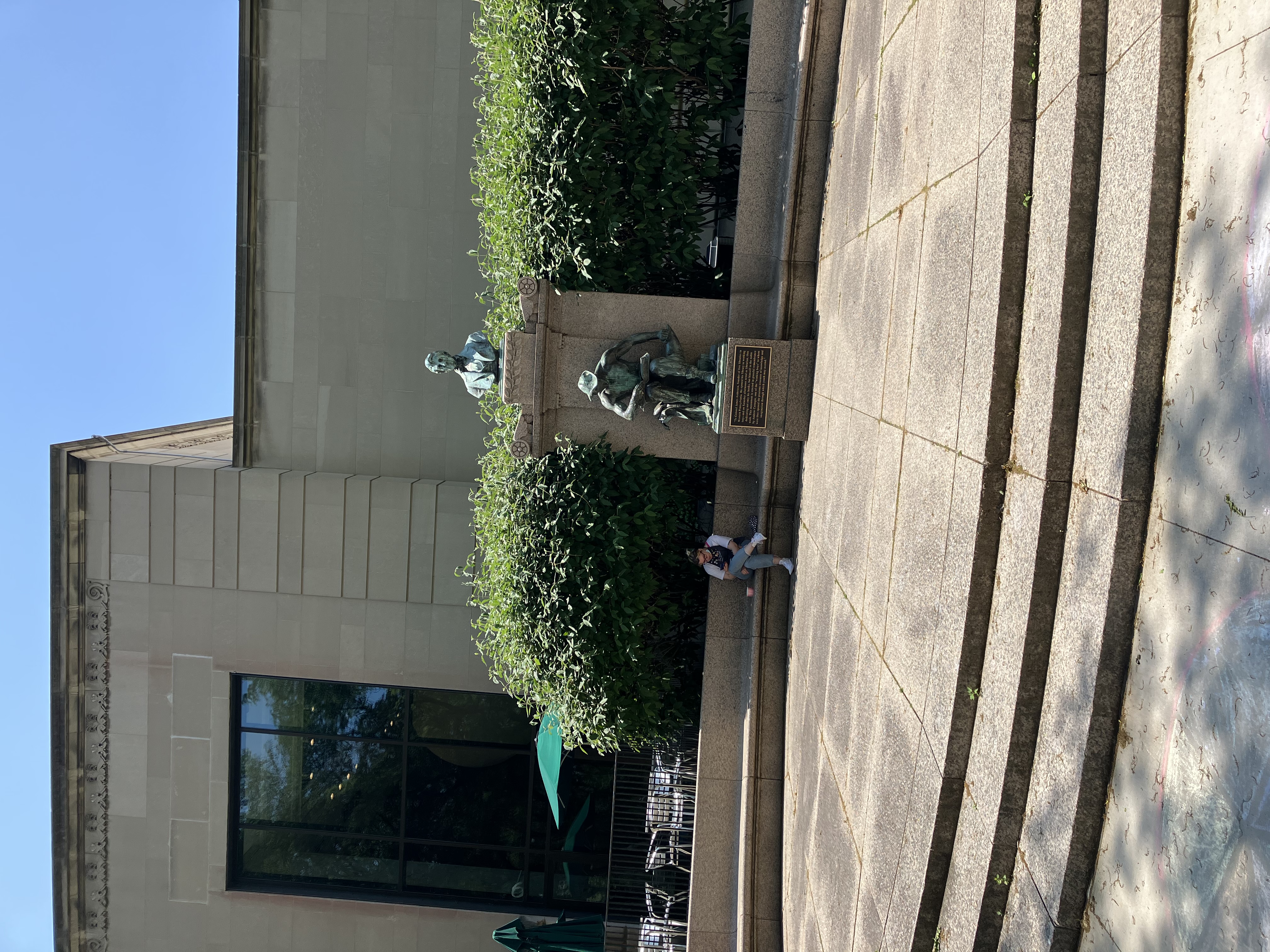
Colonel James Anderson Memorial on Buhl Planetarium's east lawn.
Buhl Planetarium Eastern Exterior Wall -
Before Removal of Astronomical Inscription from Christian Bible (from the 19th Psalm) (1) (1998 Oct.)
After Removal of Astronomical Inscription from Christian Bible (from the 19th Psalm):
Photo 1 (2023 May)
(5) ***
Photo 2 (5) (2023 May)
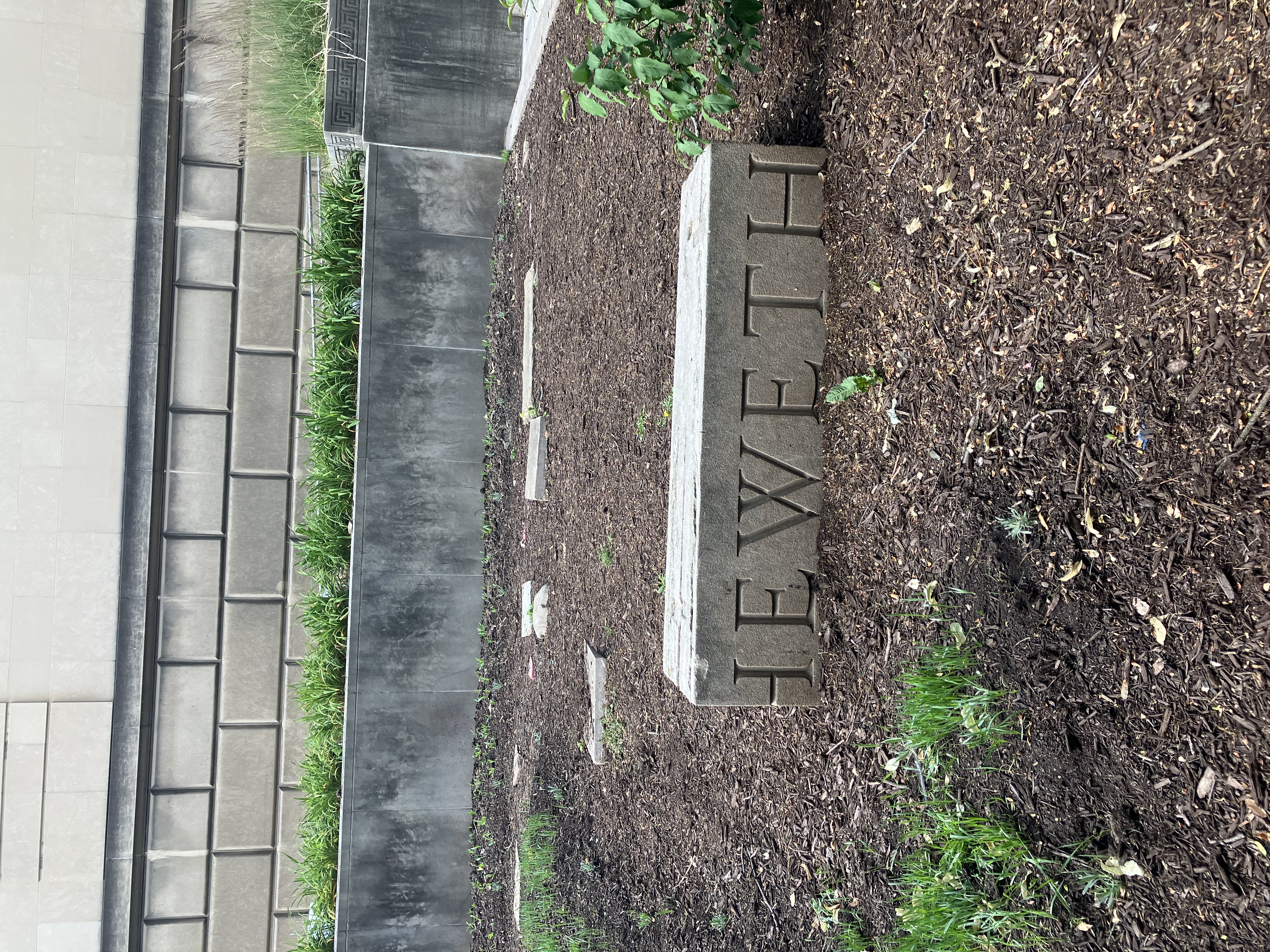
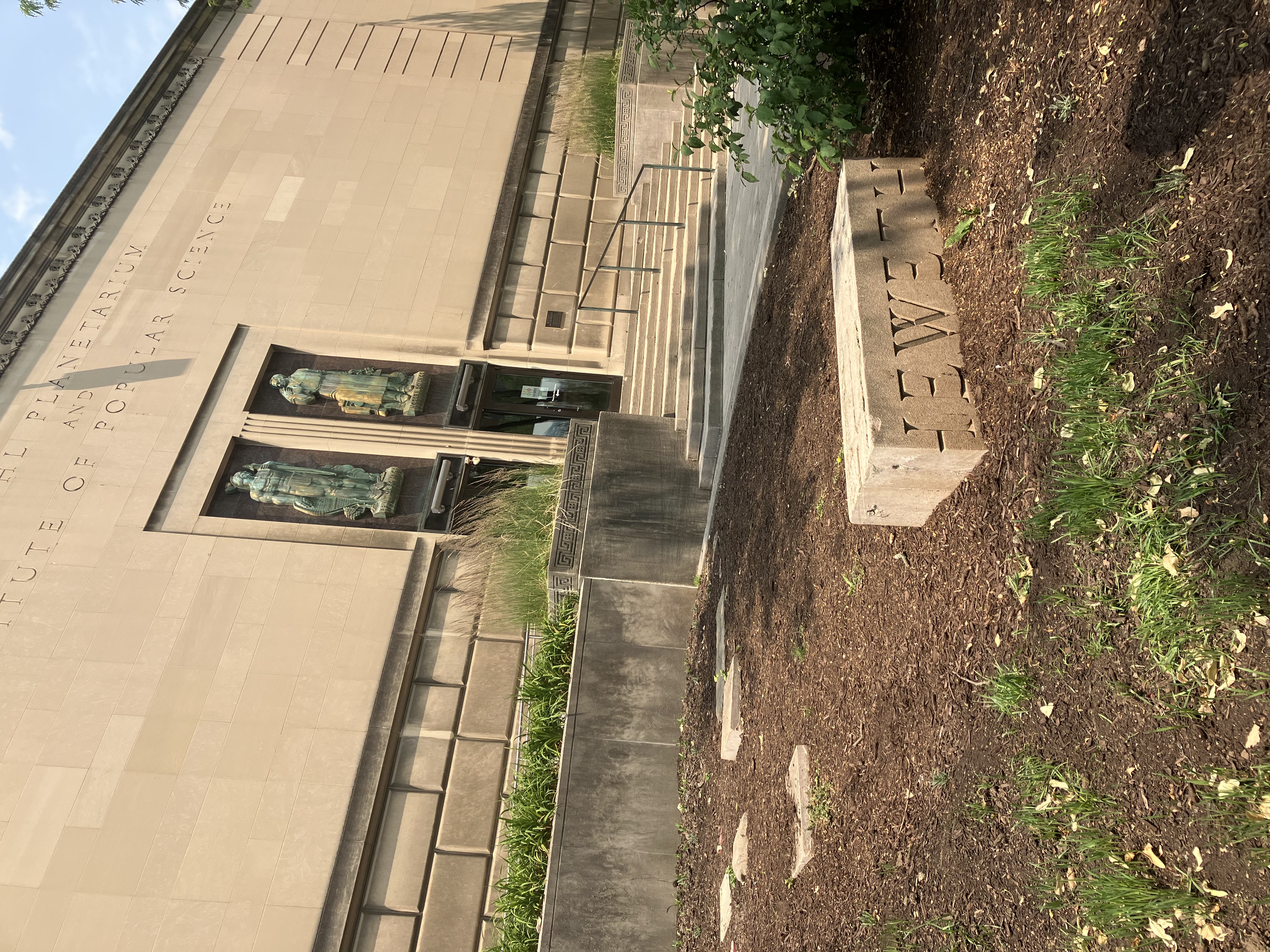
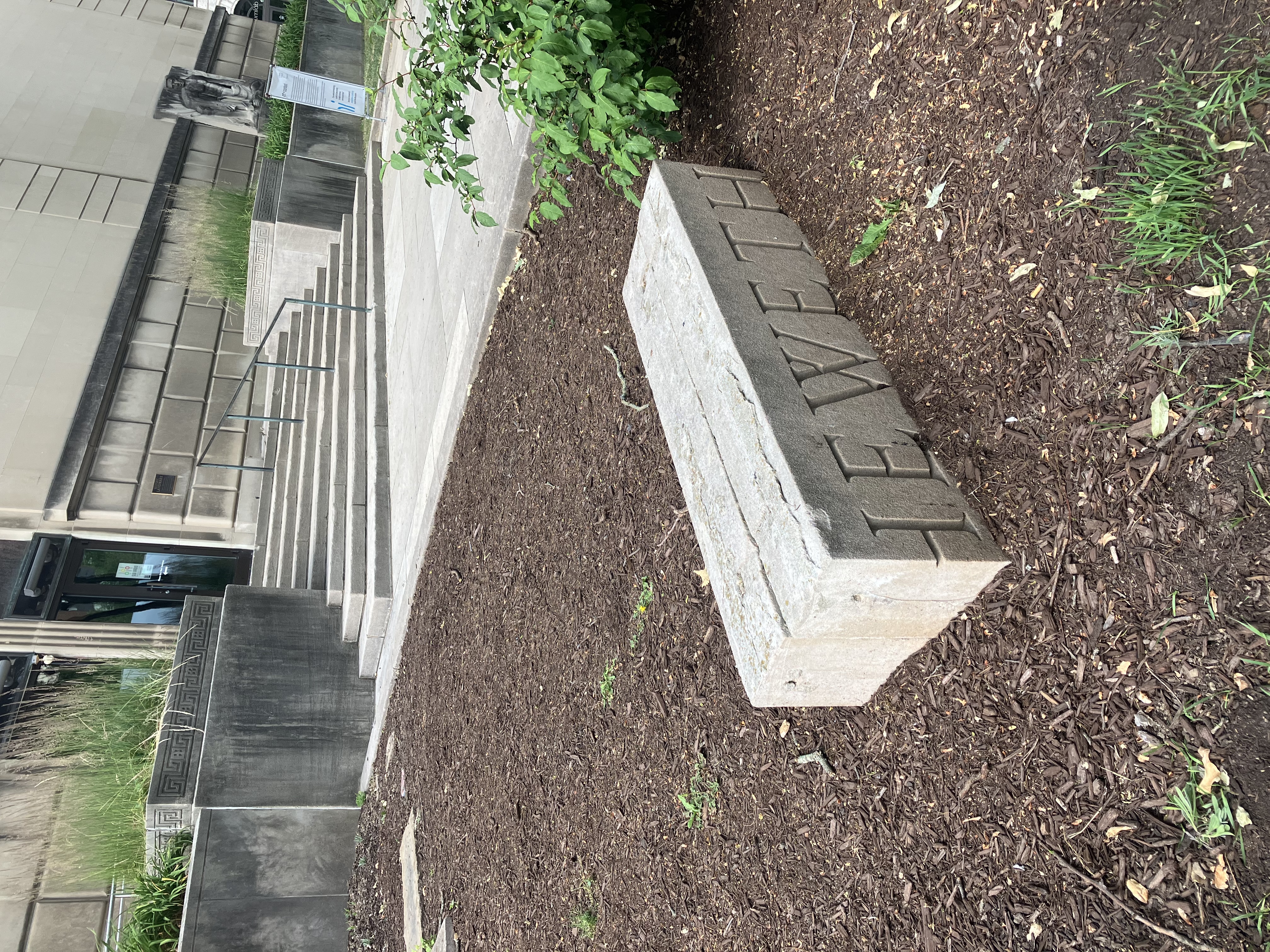
Photographs of small, partial remnant of Christian Biblical inscription (originally displayed as the Christian Biblical term, "SHEWETH"), previously inscribed on Buhl Planetarium Eastern Exterior Wall, now mounted on Buhl Planetarium's front yard (2023 June):
Photo 1 ***
Photo 2 ***
Photo 3
Also see Astronomical Inscription from the Christian Bible on Buhl Planetarium Western Exterior Wall
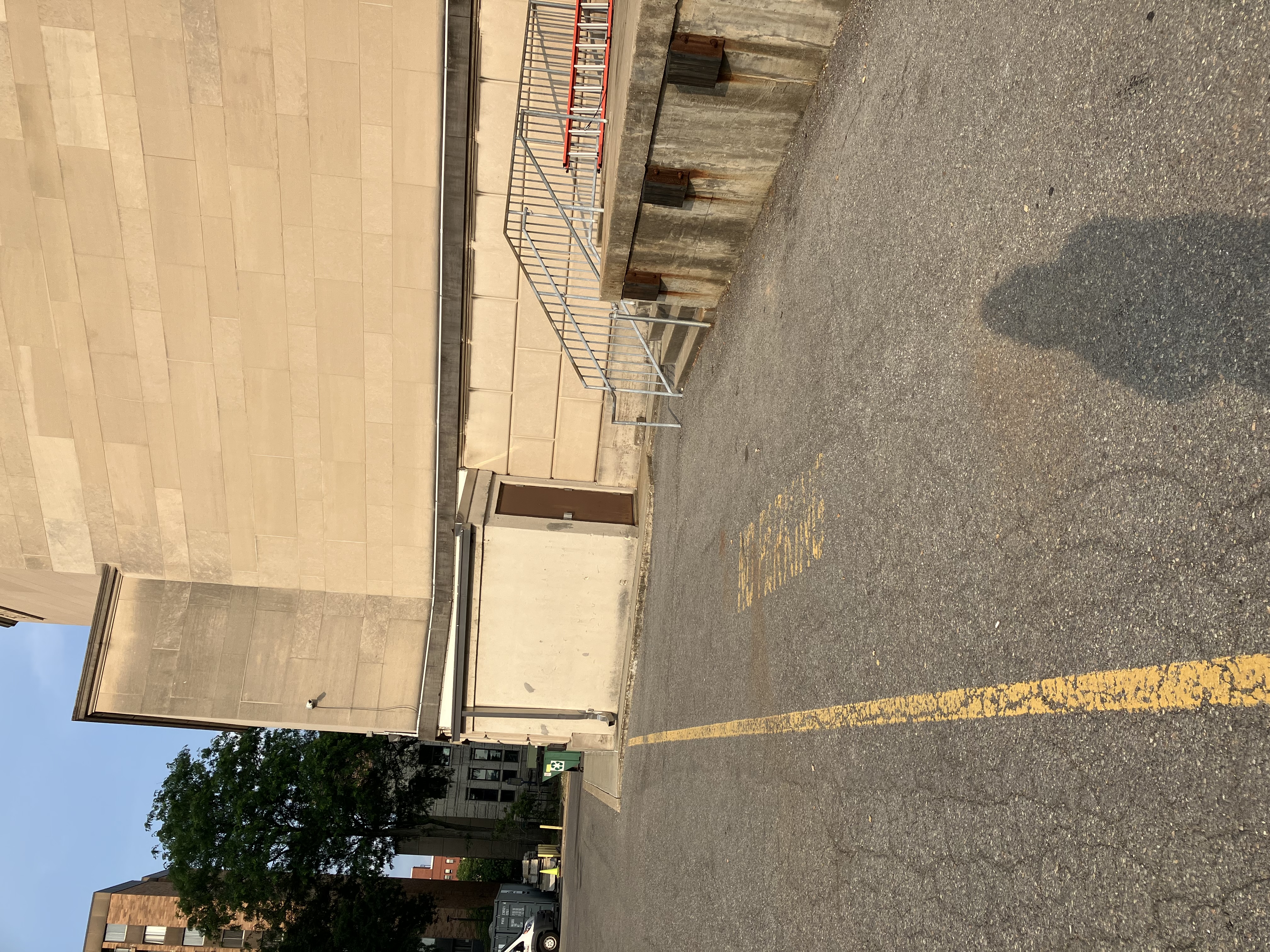
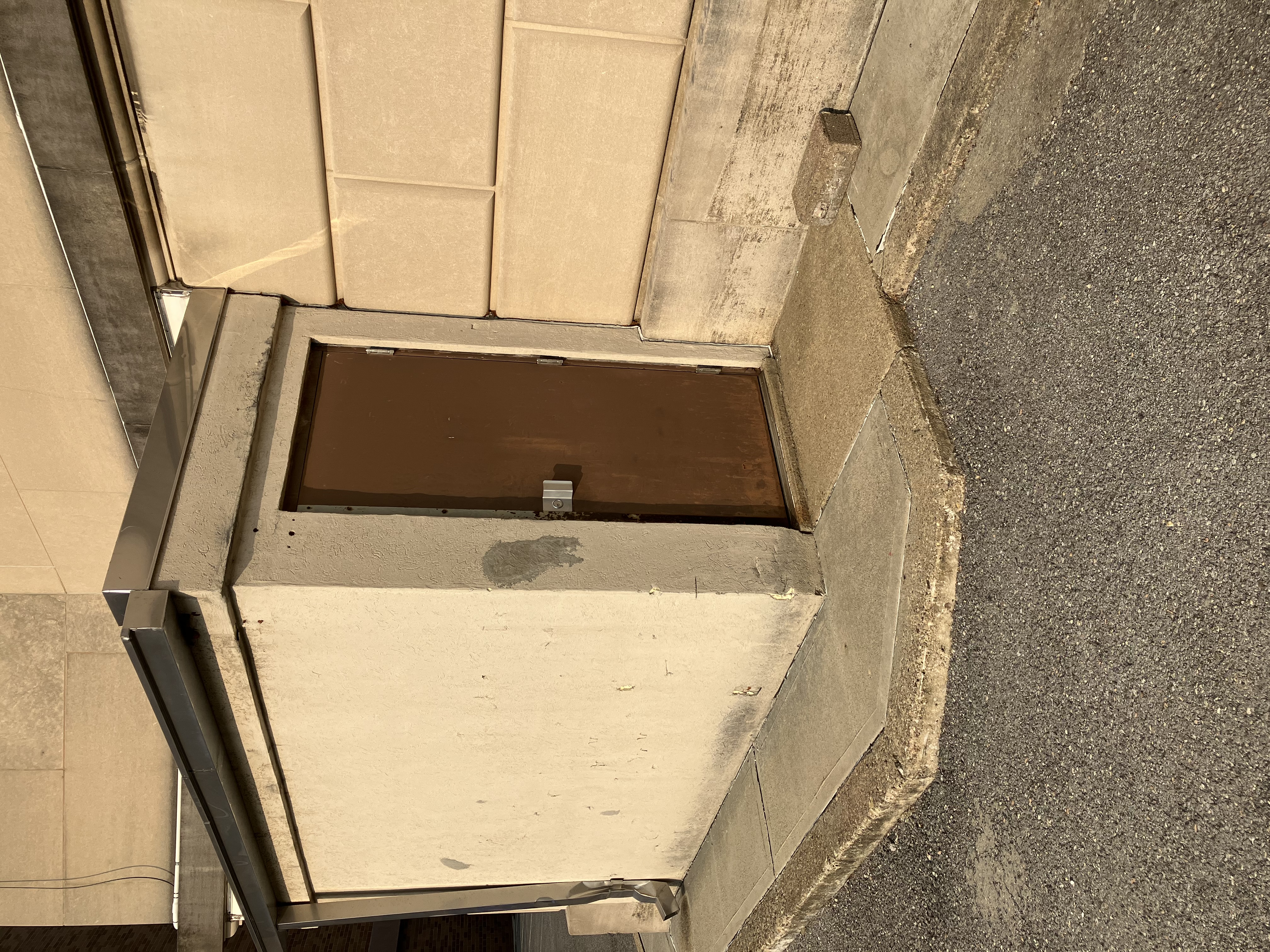
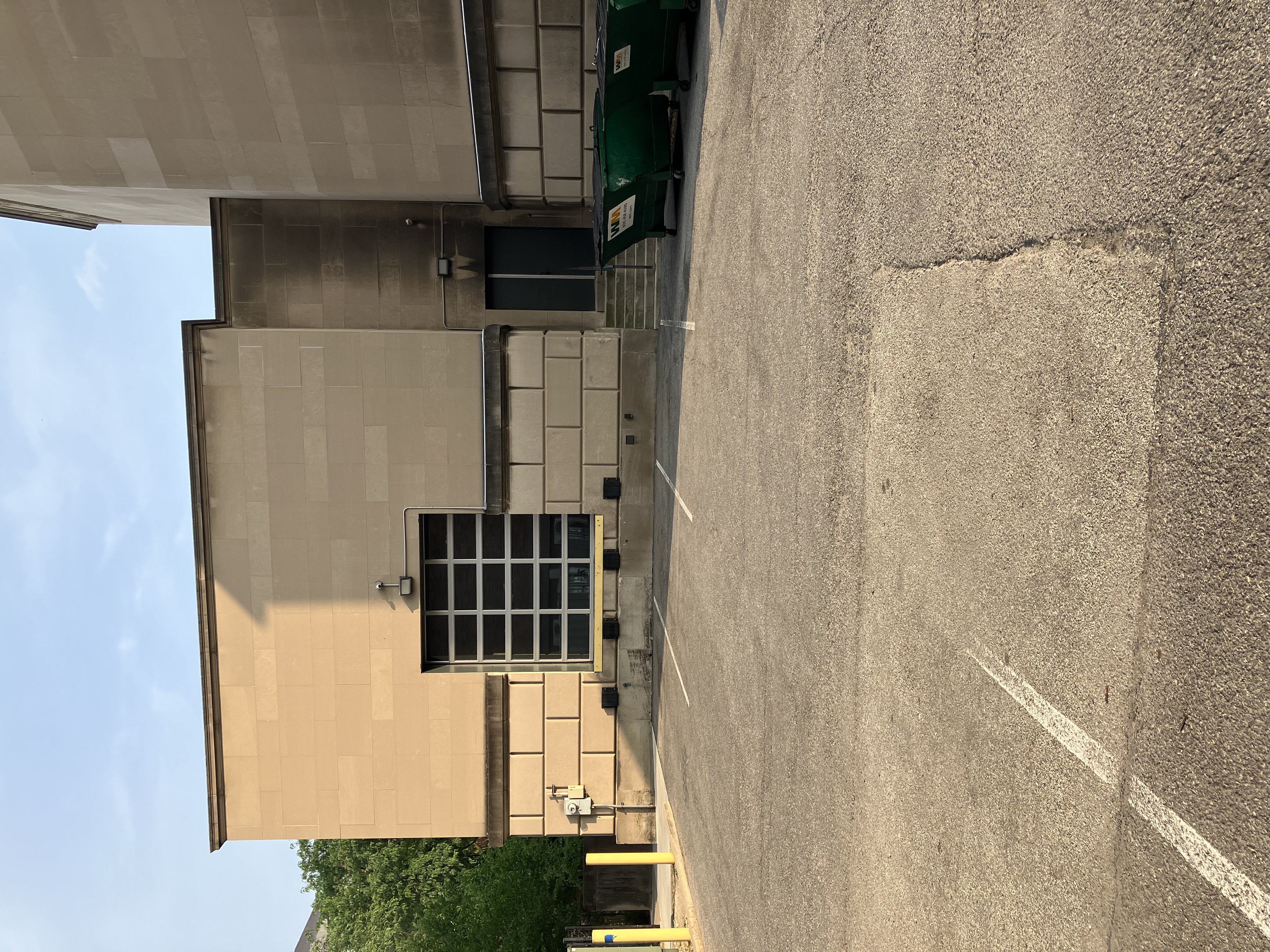
Rear of Buhl Planetarium Building -
Emergency Exit from Lower-Level Octagon Gallery, built circa 1982 (2023 June):
Photo 1 ***
Photo 2
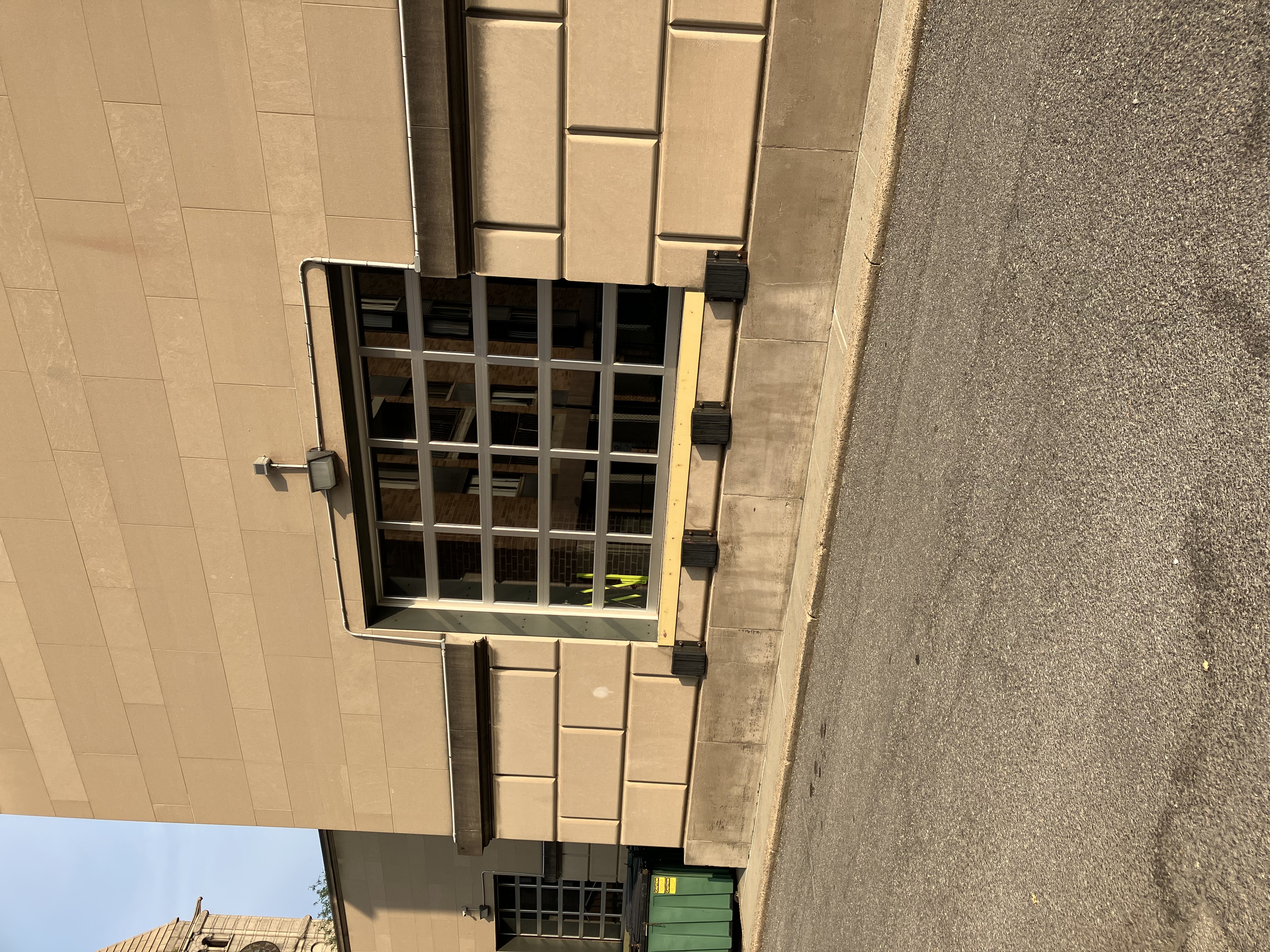
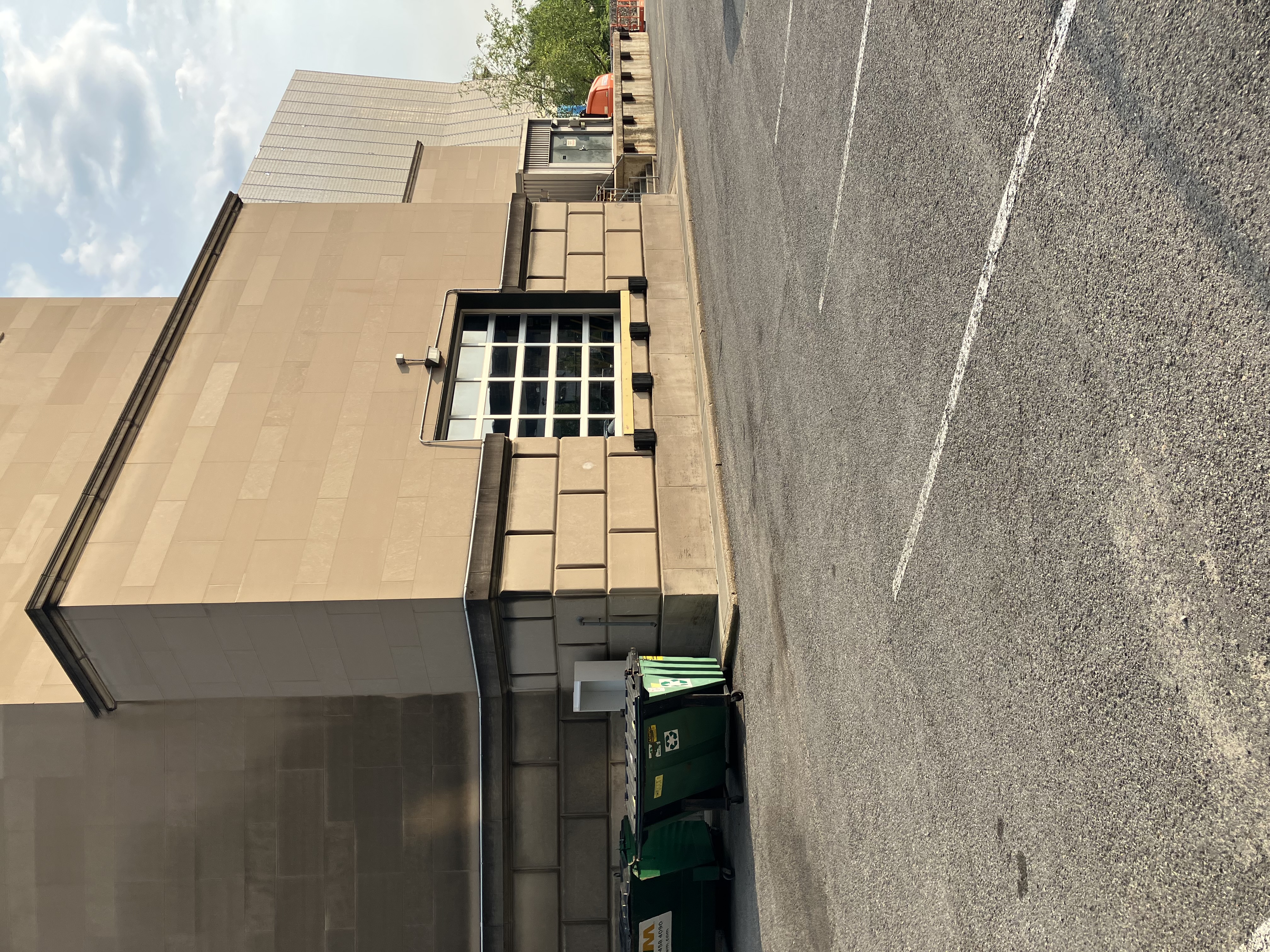
Modifications & Additions to Rear of Buhl Planetarium Building, constructed for Children's Museum of Pittsburgh in 2004 (2023 June):
Large garage-type doors, with windows, added to rear (north wall) of the Theater of the Stars / Planetarium Theater and to rear (north wall) of Hall of Universe / East Gallery -
Theater of the Stars:
Photo 1 ***
Photo 2 ***
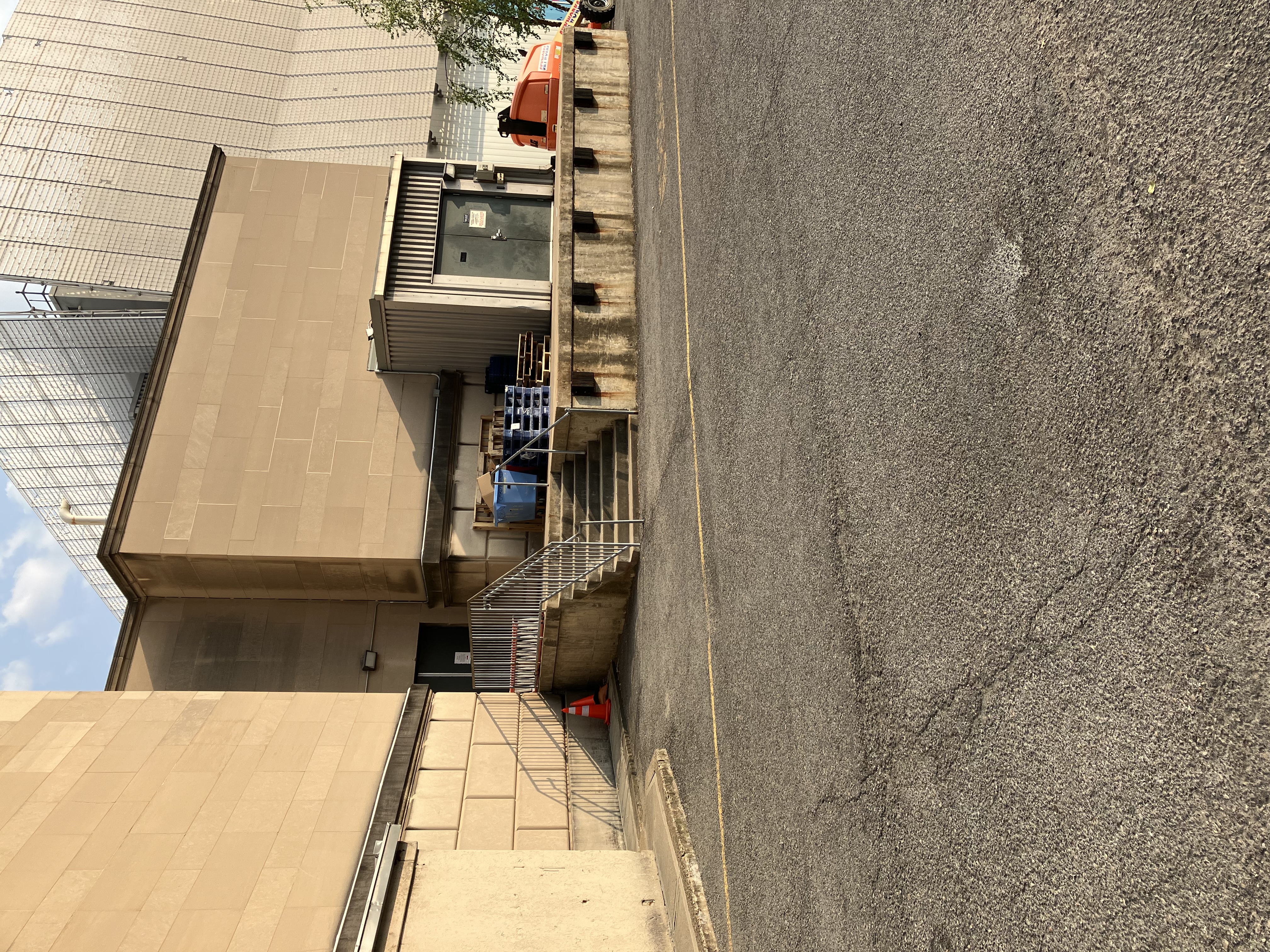
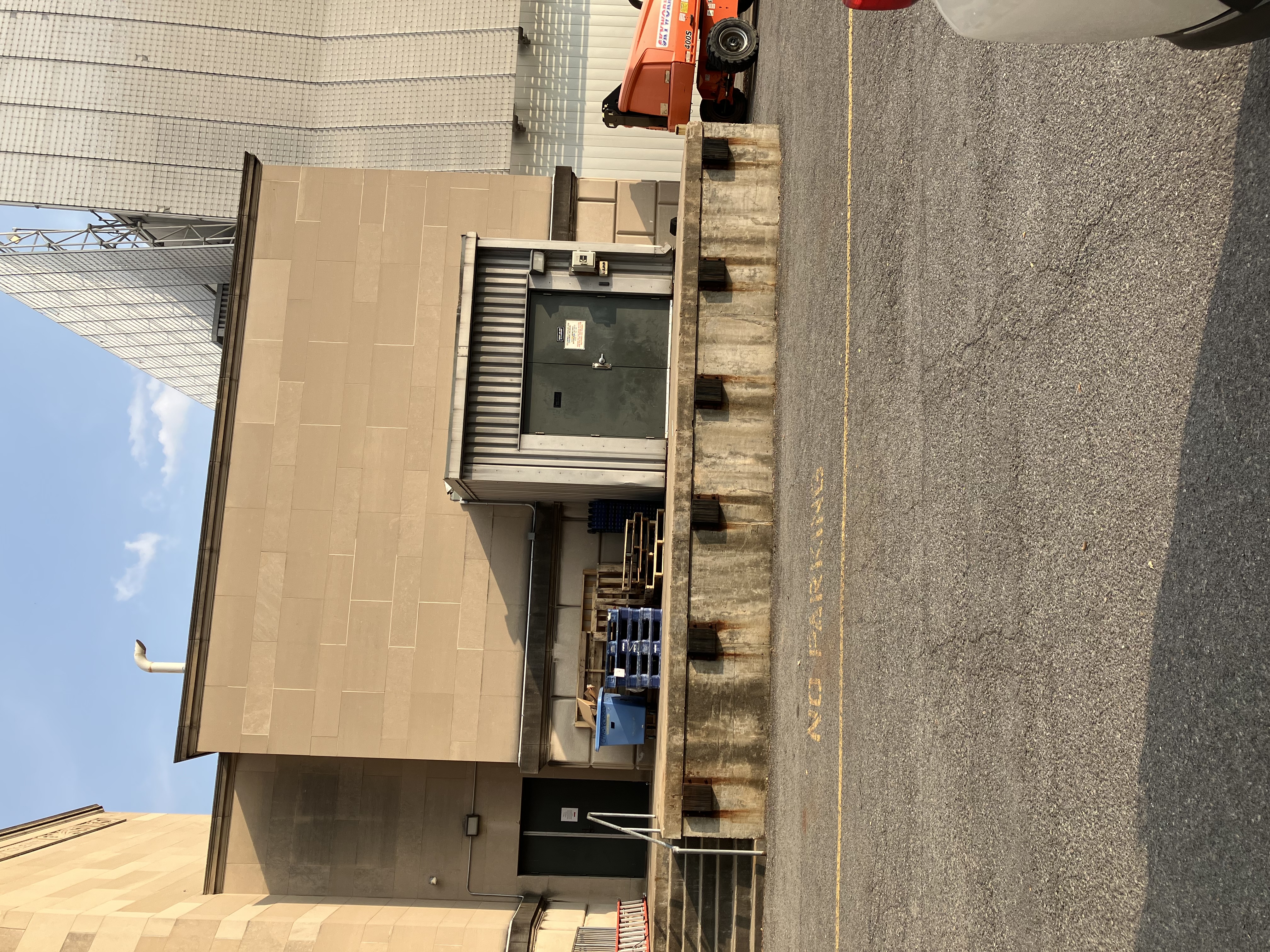
Hall of the Universe and Rear Buhl Planetarium Staff Entrance & Exit Door
New Freight Elevator (replacing former freight elevator, which was located on street-level beside the rear / north wall of the Hall of the Universe, which took freight to the former Buhl Planetarium Workshop), new Freight Dock, and Rear Buhl Planetarium Staff Exit Door:
Photo 1 ***
Photo 2
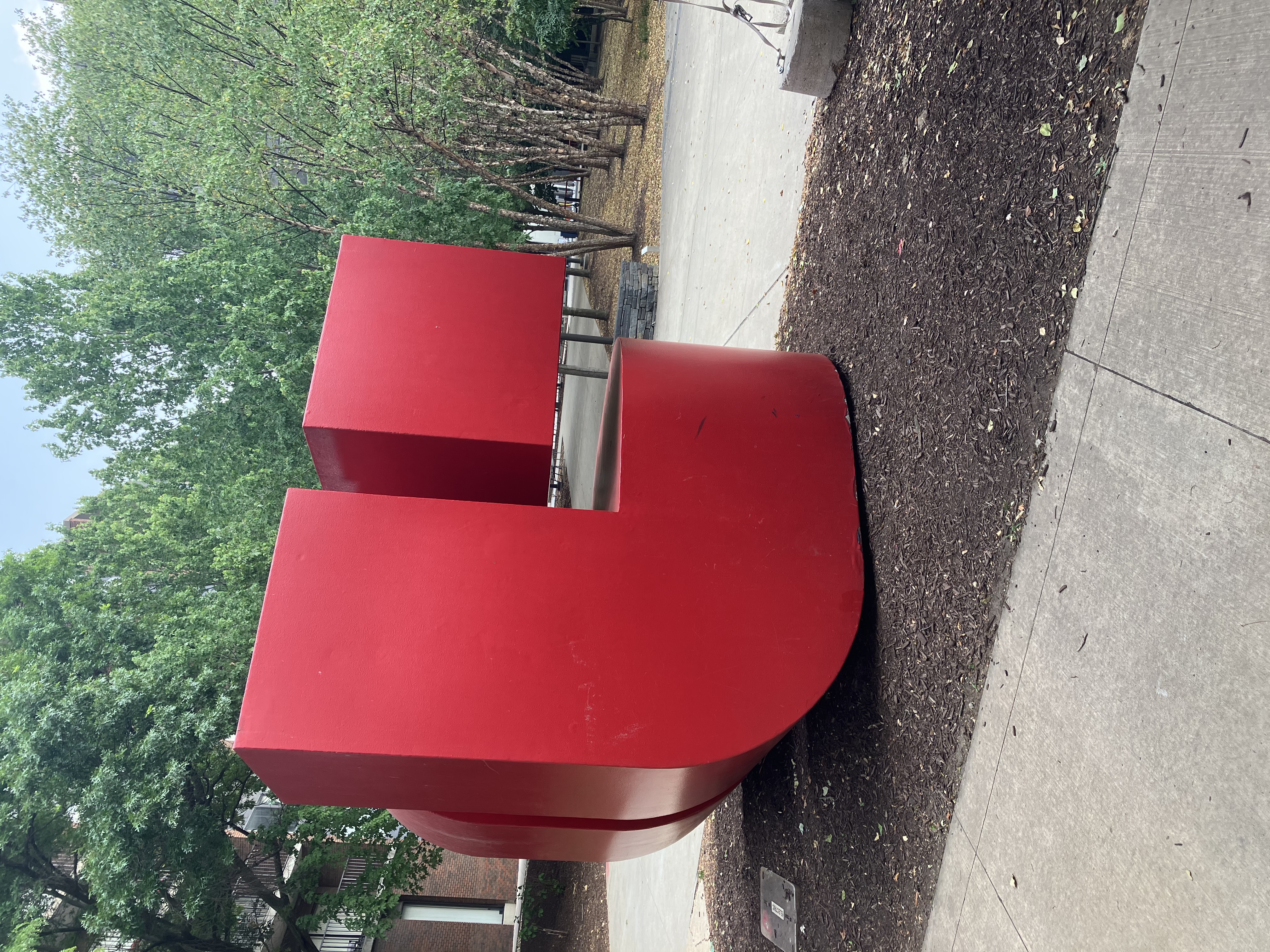
Sculptures in Allegheny Square Plaza Near Buhl Planetarium -
Red Modern Sculpture, mounted in Allegheny Square Plaza between Buhl Planetarium and Carnegie Free Library buildings.
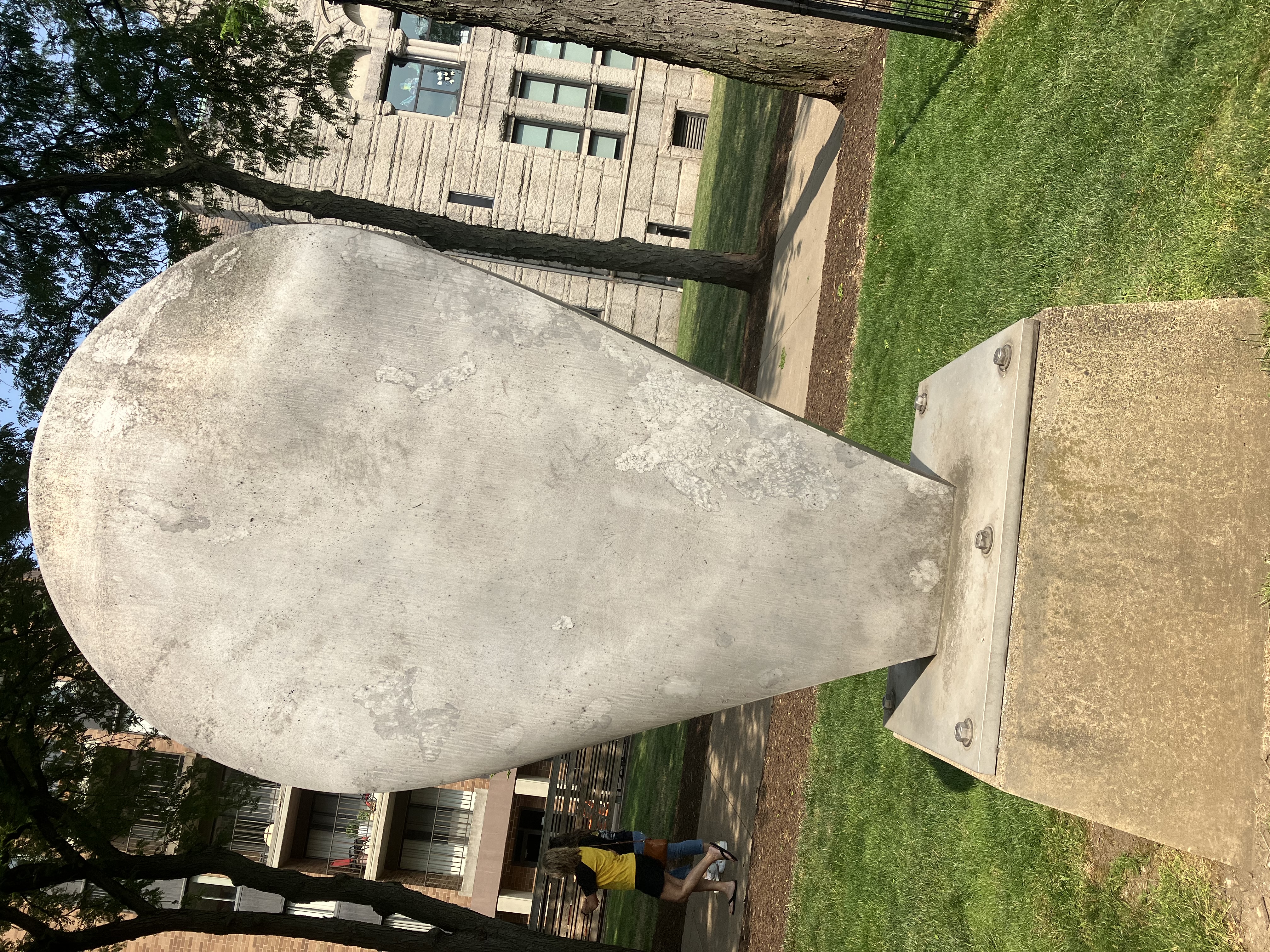
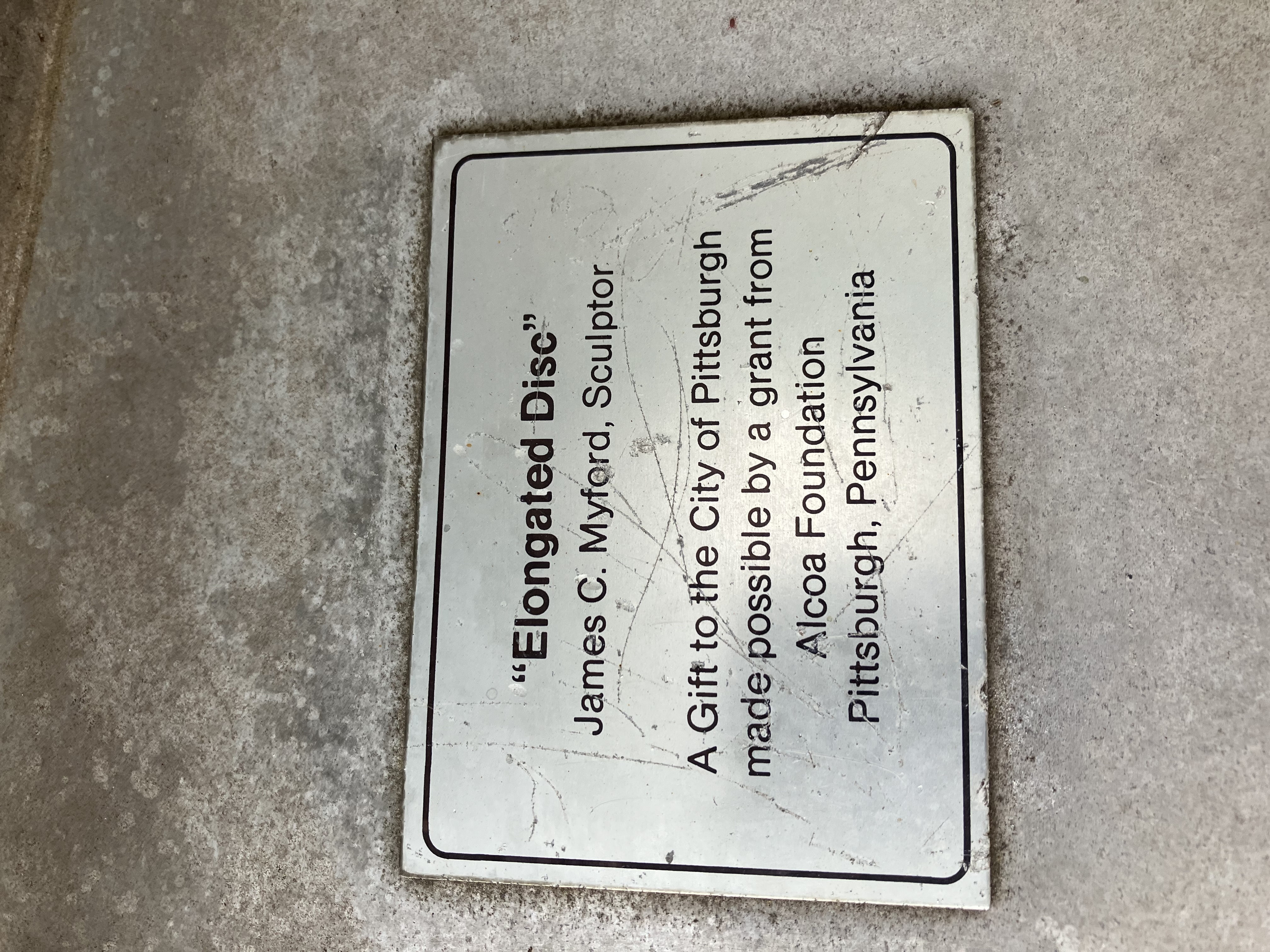
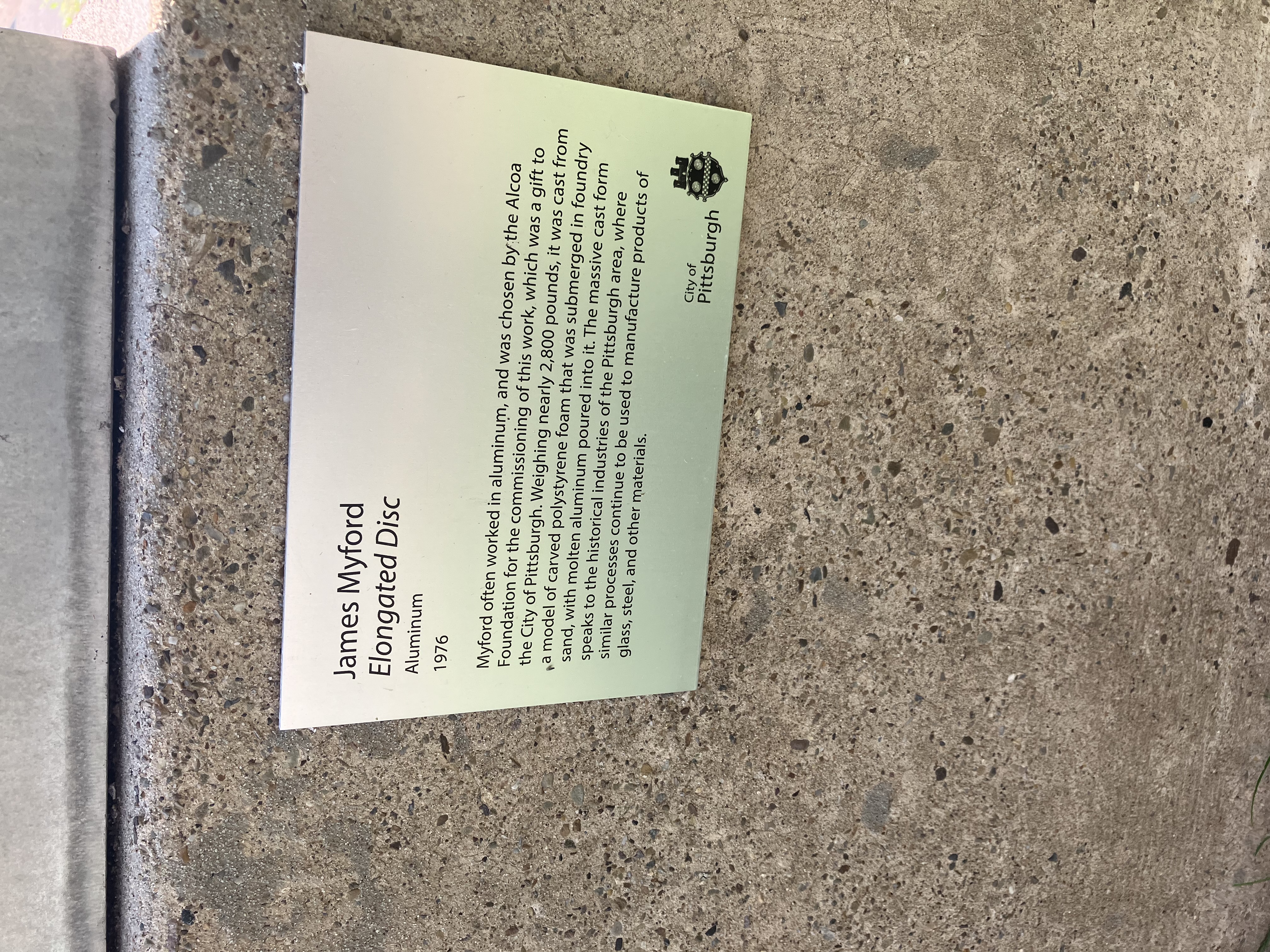
"Elongated Disc" by James C. Myford, mounted in Buhl Planetarium's east yard:
Photo 1 ***
Photo 2 ***
Photo 3
Buhl Community Park at Allegheny Square & Allegheny Square Plaza: Photographs.
The Carnegie Free Library of Allegheny building (1890 - First publicly-funded Carnegie Library in America)
Carnegie Hall / New Hazlett Theater (1890 - World's First Carnegie Hall)
Old Allegheny Post Office building (1897)
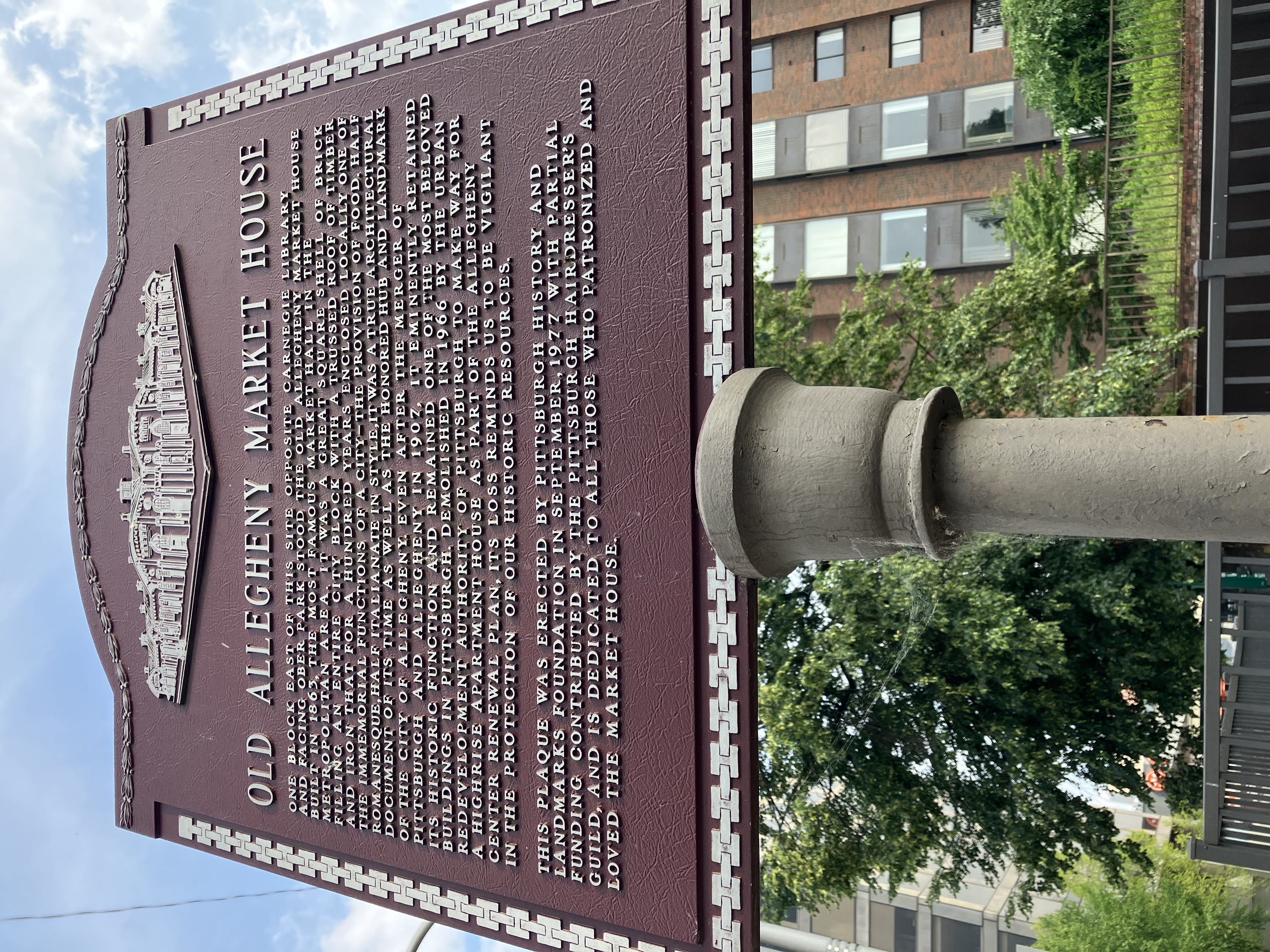
Old Allegheny Market House - previously located across East Ohio Street from The Carnegie Free Library of Allegheny:
Historical Marker located across Children's Way from the Old Allegheny Post Office building
Children's Museum & MuseumLab
Buhl Planetarium Picture Post Cards
Sold at Buhl Planetarium Gift Shop
Image of Buhl Planetarium building on 1939-era postcard
Caption at top of photograph:
"The Buhl Planetarium, Pittsburgh's "Theater of the Stars", facing Old Allegheny Town Square
Pittsburgh, Pa."
Large Postcard of The Buhl Planetarium and Institute of Popular Science
and the Allegheny Regional Branch of The Carnegie Library of Pittsburgh (circa 1950s)
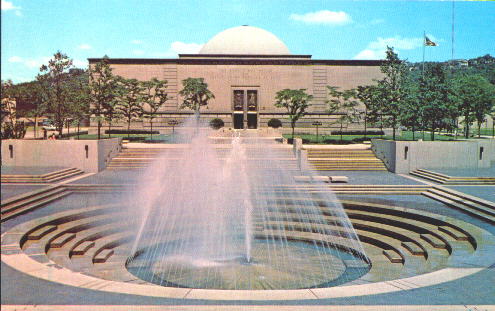
Postcard of Buhl Planetarium, with Allegheny Square Fountain in foreground (circa 1970s):
Front ***
Rear
Picture Postcards of the Zeiss II Planetarium Projector
Other postcards from the Save the Buhl web site
Construction of The Buhl Planetarium
and Institute of Popular Science
Images 1 through 5 show the former City Hall of the City of
Allegheny, Pennsylvania just prior to(and, in the case of image 5, during)
demolition to make way for construction of The Buhl Planetarium and
Institute of Popular Science. City Hall was located on the
Diamond Square in Allegheny City's downtown business district, just across
the Allegheny River from Downtown Pittsburgh. A Third Class City,
Allegheny City was
annexed to the City of Pittsburgh(City of the Second Class) in December of
1907. The Pittsburgh municipal government no longer had a use for the
Allegheny City Hall. Being a prime location in the middle of the, now,
North Side business district[across the street from the first
tax-supported Carnegie Library in the Americas and the very first Carnegie Hall, the North
Side's Post Office(previously Allegheny City's main post office, now The
Pittsburgh Children's Museum), caddy-corner from the North Side Market
House, and a block away from the prestigious Boggs and Buhl Department
Store), city officials wanted a use for the property which fit the
location(they did not want it to become a district police station or fire
station).
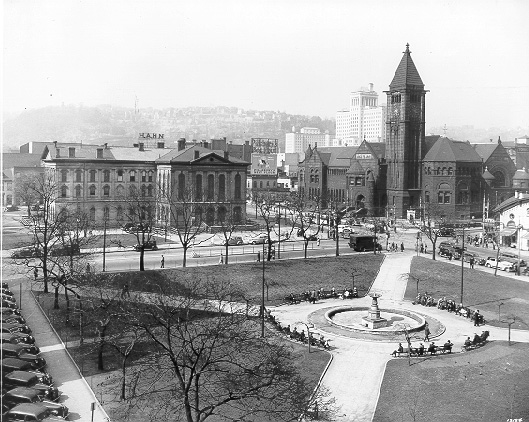
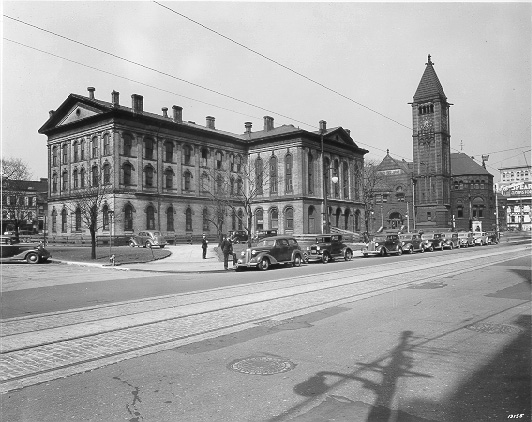
Image 1 (4) shows a
view of Allegheny City's Diamond Square(a short
time later to be transformed into "Ober Park;" during the urban renewal of
the late 1960s, this park became "Allegheny Square," in the middle of the
Allegheny Center shopping mall, office, and apartment complex development
by
ALCOA) showing the former Allegheny City Hall(on the left) and the
Carnegie Free Library of Allegheny(on the right), with Carnegie Hall to
the right of the Library clocktower. A small section of the
North Side Market House can be seen to the extreme right. The original
18-floor tower of Allegheny General Hospital can be seen in the
background. This photograph was taken by S.J. Link of Pittsburgh's Beaudry
Studio, from the window of Henry Buhl, Jr.'s office in the Boggs and Buhl
Department Store, on April 23, 1937.
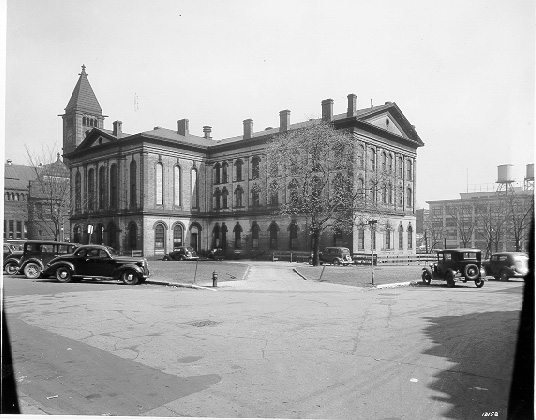
Image 2 (4) shows the former Allegheny
City Hall from across Federal
Street at
the Colonel James Anderson Memorial(then located at the corner of Federal
and East Ohio Streets), next to the Carnegie Free Library of Allegheny.
The North Side Post Office(now, The
Pittsburgh
Children's Museum)
is located in the background on the left(with a small and large dome).
Date: April 23, 1937; Photographer: S.J. Link.
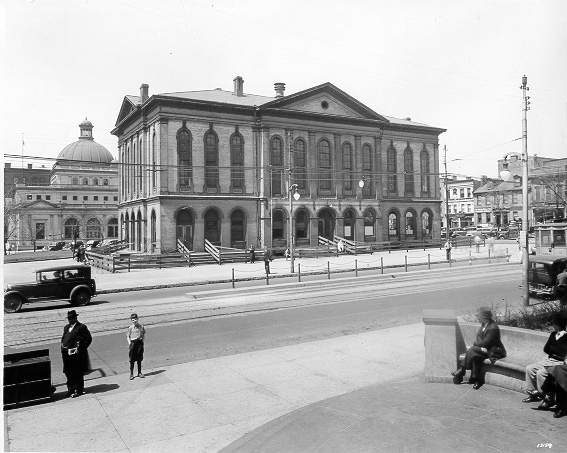
Image 3 (4) shows the former
Allegheny City Hall from across West Ohio
Street at
the Diamond Square. The Carnegie Free Library of Allegheny can be seen in
the background, on the right.
Date: April 23, 1937; Photographer: S.J. Link.
Image 4 (4) shows the former Allegheny
City Hall(rear view), photograph
taken from the northwest. To the right of City Hall, in the background,
can
be seen the Boggs and Buhl Department Store. Henry Buhl, Jr. was the
co-owner of the Boggs and Buhl Department Store, which catered to the
carriage trade, many customers coming from the Ridge Avenue mansions
in Allegheny City(several of these homes form the main campus of the
Community College of Allegheny County, five blocks from the Buhl
Planetarium building). In 1927, an $11 million bequest, from the estate of
Henry Buhl, Jr., was used to found the Buhl Foundation(then, the
thirteenth largest foundation in the country). One million dollars of
this bequest was used to construct The Buhl Planetarium and Institute
of Popular Science in 1939. Boggs and Buhl closed in
the late 1950s, and the building was razed to make-way for the Allegheny
Center shopping mall, office, and apartment building complex in the late
1960s.
Date: April 23, 1937; Photographer:
S.J. Link.
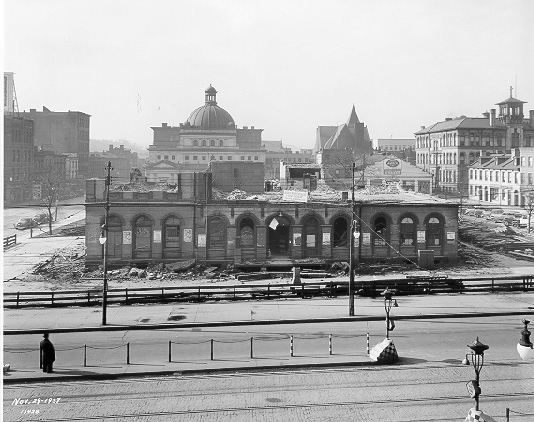
Image 5 (4) shows demolition of
the former Allegheny City Hall, to make
way for construction of The Buhl Planetarium and Institute of Popular
Science. This view, taken from the Carnegie Free Library, shows the upper
floors of the North Side Post Office(now The
Pittsburgh Children's Museum), in
the background.
Date: November 29, 1937; Photographer: S.J. Link.
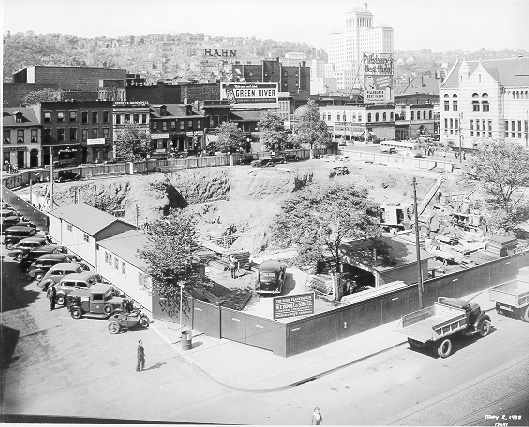
Image 6 (4) shows excavation for The Buhl
Planetarium and Institute of
Popular Science. Note that the steam shovel has been removed from the
hole and the work on the footers has begun.
On the extreme right can be seen part of the Carnegie
Free Library building. In the background can be seen the Hahn Furniture
Building and Allegheny General Hospital.
Date: May 2, 1938; Photographer: S.J. Link.
Cornelius Scully, Mayor of the City of Pittsburgh, and other public officials had
participated in the official groundbreaking for Buhl Planetarium on April 14, 1938.
Of course, this event was covered by Pittsburgh newspapers and radio stations.
Dave
Garroway, who went on to be the first host of NBC-TV's "Today Show" in the 1950s,
covered this event for Pittsburgh's
KDKA Radio [the
nation's first commercial radio station (also see
efforts to establish the National Museum of Broadcasting in Pittsburgh)
which had started by broadcasting the Harding--Cox U.S. Presidential Election Returns on
November 2, 1920]. Interestingly, during Mr. Garroway's two-year stint (1939 to 1941) with KDKA-AM, once he reported from a U.S. Navy submarine in the Ohio River; in October of 1990, Buhl Planetarium / Buhl Science Center started public tours of a World War II and Cold War era submarine, the
USS Requin, which was retired and brought to a mooring on the North Shore of the Ohio River (next to the under-construction
Carnegie Science Center) for science and history education for the general public.
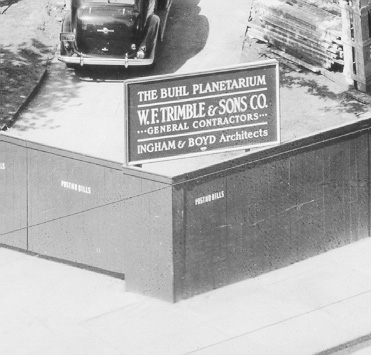
Image 7 (4) is a close-up view of the
construction sign, facing West Ohio
Street, at the corner of
the excavation site. The sign says "THE BUHL
PLANETARIUM, W.F.TRIMBLE&SONS CO. ---GENERAL CONTRACTORS---, INGHAM &
BOYD, Architects."
Date: May 2, 1938; Photographer: S.J. Link.
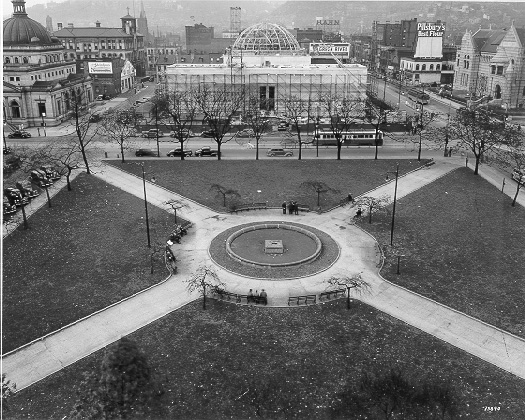
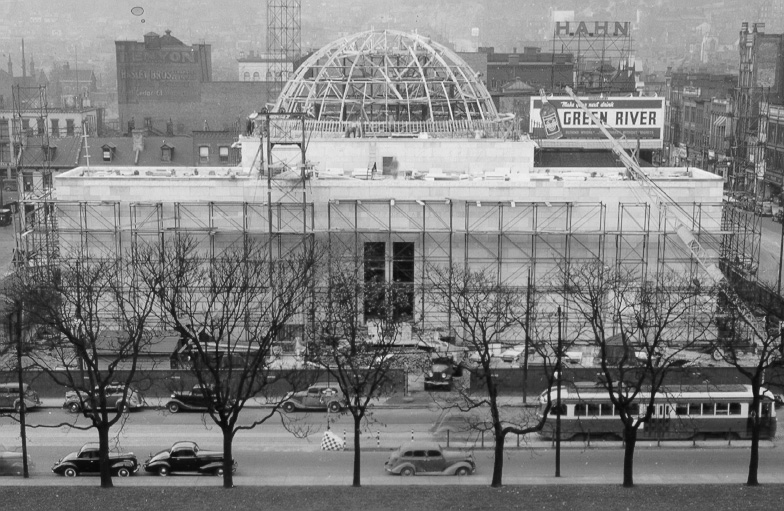
Image 8 (4) and Image 9 (4)(close-up view of
building) show construction progress
of The Buhl Planetarium and Institute of Popular Science on October 22,
1938(a year before the building opened to the public). The frame of
the outer
planetarium dome is shown under construction;
click here for more information about the construction of Buhl Planetarium's dome.
The photograph, from which
these two images were taken, was
taken from the roof of the Boggs and Buhl Department Store. The Diamond
Square(with the fountain now removed) is in the foreground of photograph
8, with part of the North Side Post Office(now The
Pittsburgh Children's Museum) seen
on the left and part of the Carnegie Free Library seen on the right.
Notice that a new
Presidents' Conference Committee(PCC) streetcar(which had its
Pennsylvania premier
in 1936 in Pittsburgh) can be seen on West Ohio Street in front of
the
Buhl building; an older model streetcar can be seen coming down Federal
Street. Being in the center of the former downtown business district of
Allegheny City, Buhl was built where several streetcar lines
converged, providing excellent transportation to the planetarium and
science center. Today, most North Side and North Hills bus routes serve
Allegheny
Center, with the Buhl Planetarium building in the middle of the complex.
By the end of the first decade of the new millenium, Light Rail Transit
should return to serve the North Side, with stations serving Allegheny
Center(and the Buhl building) and The Carnegie Science Center; this rail
line will connect with the Downtown Subway System. The last PCC
streetcar
to operate revenue service in
Pennsylvania(and one of the last in the United States) ended
service, on the Drake Loop
to Castle Shannon Station rail line in Pittsburgh's South Hills, with a
return to the South Hills Village Light Rail station(prior to proceeding
into the South Hills Rail Yard, adjacent to South Hills Village) on
Saturday, September 4, 1999 at 10:29 p.m. PCC
streetcars can still be seen at the Pennsylvania
Trolley Museum in Arden, near Washington, Pennsylvania.
Date: October 22, 1938; Photographer: S.J. Link.
Image 10 is a color photograph of the
Buhl building, with a PCC streetcar in the foreground. This photo shows
Port Authority of Allegheny County/PATransit(originally Pittsburgh
Railways Company) streetcar number 1652-5 turning from Federal
Street(inbound) onto East Ohio Street. Shown in the background, behind the
domed Buhl Planetarium building, is the
domed North Side Post Office(formerly Allegheny City's main Post
Office), which is now the home of The
Pittsburgh Children's Museum. This photograph was taken in
April of 1966.
Note that Federal Street was the dividing line
between East Ohio Street and West Ohio Street. At the intersection of
Federal Street and East Ohio Street was The
Carnegie Library of
Pittsburgh, Allegheny Regional Branch(north side of East Ohio Street)
and
the Allegheny Market House(south side of East Ohio Street). At the
intersection of Federal Street and West Ohio Street was The Buhl
Planetarium and Institute of Popular Science(north side of West Ohio
Street) and Ober Park(south side of West Ohio Street). With the urban
renewal of the late 1960s, the Market House and Boggs and Buhl Department
Store were razed to make-way for Allegheny Center, which included a
two-level shopping mall, three office buildings(including the new IBM
Building), and
four high-rise apartment buildings; a three level parking garage was
constructed under Allegheny Center. Sections of Federal Street, East Ohio
Street, West Ohio Street, and a few other side streets in the area were
closed to traffic to make a pedestrian mall. Ober Park became Allegheny
Square, with a new fountain(which could also be used as an amphitheater)
right in front of The Buhl Planetarium and Institute of Popular Science.
Although some retail shops remain in the plaza outside of Allegheny Center
Mall, the shopping mall has become a new office complex. A Senior Citizen
mid-rise apartment building is now being constructed, just to the west of
the Allegheny Center Mall(in a parking lot that was known as the "Farmers'
Market" site, as this site was used for a weekly farmers' market, in the
good-weather months, after the Market House was razed).
The domed Post Office building, next to Buhl, was replaced by a modern
Allegheny Station Post Office on Federal Street(on the former site of the
Pennsylvania Railroad's Fort Wayne Railroad Station, the main railroad
station for Allegheny City), just south of the Allegheny Center Mall. Buhl
Planetarium had been offered the old Post Office building for one dollar,
as an expansion of Buhl's Institute of Popular Science, but Buhl
management declined the offer. The Allegheny Center master plan
included razing the old Post Office, for construction of a fifth
apartment high-rise. However, the Pittsburgh
History and Landmarks
Foundation purchased the old Post Office and transformed it into a
city
history museum.
On June 12, 1983, The Pittsburgh
Children's Museum started operations in the lower level of the Old
Post
Office city history museum. In 1987, the Children's Museum
was granted use of all three floors of the building. Noting the
Children's
Museum's "total and positive" association with the Old Post
Office building, the Pittsburgh History and
Landmarks Foundation
presented the deed for the building to The Pittsburgh
Children's
Museum in June of 1991. The programs of the Children's Museum
were recently enhanced by a major building rehabilitation, completed in
December of 1998. The
Pittsburgh Children's Museum is one of eight sites
in the nation chosen for National Public Science Day.
Although the Old Post Office city history museum no
longer exists, the Historical Society of Western Pennsylvania has created
a new Senator John Heinz Pittsburgh
Regional History Center in
Pittsburgh's
Strip District(corner of Smallman and Thirtheenth Streets), just east of
Downtown Pittsburgh's Golden Triangle.
Dome Construction of Buhl Planetarium's Outer Dome.
Click here, to see
additional 1937 images of the Carnegie Free Library of Allegheny.
Photographs with Number (1): © Copyright 1999
Lynne S. Comunale, All Rights Reserved.
Internet Web Site Master Index for
the History of
The Buhl Planetarium and Institute of Popular Science,
Pittsburgh
Disclaimer Statement: This Internet Web page is not affiliated with
the
Henry Buhl, Jr.
Planetarium and Observatory,
The
Carnegie Science
Center, or The
Carnegie Museums of Pittsburgh/Carnegie Institute.
This Internet, World Wide Web Site administered by Glenn A. Walsh.
Unless otherwise indicated, all web pages in this account are © Copyright
2000, Glenn A. Walsh, All Rights Reserved.
Additions and corrections to:
photoalbum@planetarium.cc
Last modified : Tuesday, 27-Jun-2023 23:52:10 EDT.